As regular readers of this blog know, we (the Hofkriegsrat team, namely "Czar" Barry, Joe, Greg, Roger and myself) had been planning, painting figures, and play-testing our scenario for the Battle of Borodino (September 7, 1812) for the past 2 years. As the table we would be using was available to us all day Friday, we actually started setting the game up by 10AM for a 7PM start; that was a good thing, because it wound up taking about 4+ hours to do it, in part because only Barry and I really understood where and how the troops would deploy at the start of the game (and the bulk of the figures themselves were ours, and organized by us; Joe, along with Roger and Greg, the later two being unable to attend, provided the remainder of the troops for this monster game). At about 7PM, we took a show of hands for players. Between pre-registration and those who couldn't get one of the 14 slots but who had expressed an interest in playing in advance and were given conformation of a guaranteed slot, we actually had 24 potential players. I think we wound up with about 18; almost half of the pre-registered players failed to show up at the table; this is a bit worse than usual; I generally expect about a 33% no show rate; we certainly could have used even a few more players to help everything run as smoothly as possible for such a large game. The rules used were Field of Battle, 2nd ed. by Brent Oman. Almost all of the players had at least some familiarity with the rules, which certainly helped.
As best I can recall, here's the list of players and their commands, from the North (Borodino) to the South (Utitsa) of the table. Please feel free, nay, encouraged to correct any errors and/or omissions on my part in this regard!
RUSSIANS: under Marshal Kutusov (Jeff)
Baggavout (2nd Corps) - from Reserves: Brian
Guard Jagers and 2nd Cavalry Corps: Jamie (later also 1st Army Artillery Reserve)
Docturov (6th Corps): Zach (later also 3rd Cavalry Corps - Kreutz, from Reserves)
Raevski (7th Corps): Dave S. (Later also Osterman-Tolstoy, 4th Corps, from Reserve)
Grand Duke Constantine (Imperial Guard): Jeff
Borozdin II (8th Corp): Michelle
Tuchkov (3rd Corps): Thomas
Count Markov (Opolochenie and Karpov's Cossacks): Alex
FRENCH: under Emperor Napoleon I (Jim M.)
Prince Eugene (IV Corp) and Grouchy (III Cavalry Corp): Hal and ?
Ney (III Corp): Hugh
Montbrun (II Cavalry Corp): Walter (later Latour Mabourg's IV Cavalry Corp)
Army Artillery Reserve): Jim M.
Davout (I Corp): Travis and Andy
Nansouty (I Cavalry Corps): Dave M.
Poniatowski (V Corps): Gabriel and Walter
Borodino wasn't the largest battle of the Napoleonic wars by a long shot - Wagram, Bautzen, Dresden, and of course Leipzig were all considerably bigger. It was, however, the bloodiest battle of the Napoleonic wars. This was in part due to the very high concentration of men and (especially) artillery pieces on a relatively small battlefield. For this action, an Infantry unit represented about 900 men, 600 men for Cavalry, and 12 guns for Artrillery. OK, time for some (well, actually, a LOT) of pictures! We will start with some set piece shots of the table before the game started, going counter clockwise around the table.

Poniatowski's V Corp, ready to advance upon Utitsa.

Karpov's Cossacks, stationed on the far Southern end of the Russian position.

Nine units of Opolochenie in the woods near Utitsa.

Tuchkov's 3rd Corps opposite Utitsa.

Part of Borozdin's 8th Corps

The remainder of Borozdin's Corps, defending the Fleches.

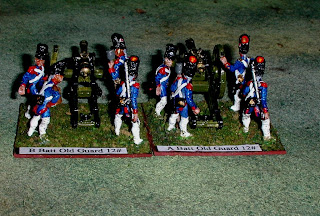
A combined Grenadier Division backing up the Fleches; these are effectively the same as Line!

Part of Siever's 4th Cavalry Corps.

Part of Raevski's 7th Corps, defending the Great Redoubt.

Raevski's other Infantry Division, deployed in support

The two Divisions of Docturov's 6th Corps, composed of some of my veteran Minifigs, accompanied by some of my rather new Sash and Saber Jagers.

Osterman-Tolstoy's slightly weak 4th Corps, just to the south of the Koltocha river, and Borodino itself.

Korf's 2nd Cavalry Corp, stationed to the North of Borodino.

Overview of the massive IV Corps of Eugene de Beauharnais, Viceroy of Italy and stepson of Napoleon; Two of Davout's Divisions (Morand and Gerard) had been transferred to his command. Grouchy's small II Cavalry Corps is in reserve to the rear, doubtless keeping a wary eye out for Cossacks! The French supply trains are seen in the distance. Their fist assignment is to seize control of the Borodino village from the Jagers of the Russian Guard, who hold it at the start of the battle.

Part of Ney's III Corps; the small Wurttemburg Division to the left, and Ledru's Division to the right.

The remainder of Ney's III Corps: Razout's Division supported by the Corps cavalry.

Montbrun's large II Cavalry Corps; at the start of the battle, there is very little (seemingly) opposing them.

Friant's Division, forming part of Davout's I Corps; these are Roger's figures.

Desaix's Division of Davout's Corp; these are Greg and Barry's troops. The Corps Light Cavalry are mine (Sash and Saber figures).

Compan's large Division of Davout's Corp; Foundry figures from my collection.

Nansouty's I cavalry Corps, mostly my figures, assorted manufacturers!

An overview, unfortunately rather dim, of the table - 30 feet long by 5 feet wide, except the 6 feet on each wing where the table is 7.5 feet wide. This is looking from Utitsa towards Borodino.

And the view from the opposite end, looking from Borodino towards Utitsa.

The players have settled on their commands - Zach, Dave S, and ? Eric are seen here on the Russian side.

Some of the French players - form the right, a partially chopped off Jim M scouts the battlefield, while Hugh, and Walter study the opposition.

Hal looks a bit overwhelmed trying to figure out how to handle the massive French forces opposite Borodino; I can't say that I blame him, although he had help from another player on the far Northern flank whose name I missed.

The French won a big spread of initiative to start the game; here one of the Divisions of Poniatowski's Poles has rolled high with it's commander's Leadership die and has aggressively taken the fight to the hated Russkis!

Equally aggressive, Dave M's Cavalry Corps is advancing swiftly and pressing the Russians as well.

One of Davout's Divisions also rolls hot and surges forward to attack the Fleches...

along with a sister Division!

Not to be outdone, the beau-sabers of Montbrun's cavalry also canter forward toward the relatively open (appearing) Russian Center!

Ney's Divisions move forward more circumspectly, whether due to prudence or lower Leadership die rolls!

Eugene's massive sledgehammer slams forward, with his lead units handily ejecting the Jagers of the Russian Guard from the first of the three town sections of Borodino proper.

Another French MOVE card, and Ney's 3rd Division is already attacking the Great Redoubt; some lucky shooting has silenced one of the Russian batteries defending the earthworks!

One of Davout's regiments is routed by concentrated Russian artillery fire during the first attack on the Fleches.

Grudge match action between Poniatowki's Poles and Tuchkov's Russian regulars.

The Chasseurs and Uhlans of the Grand Duchy of Warsaw also get caught up in the bold advance!

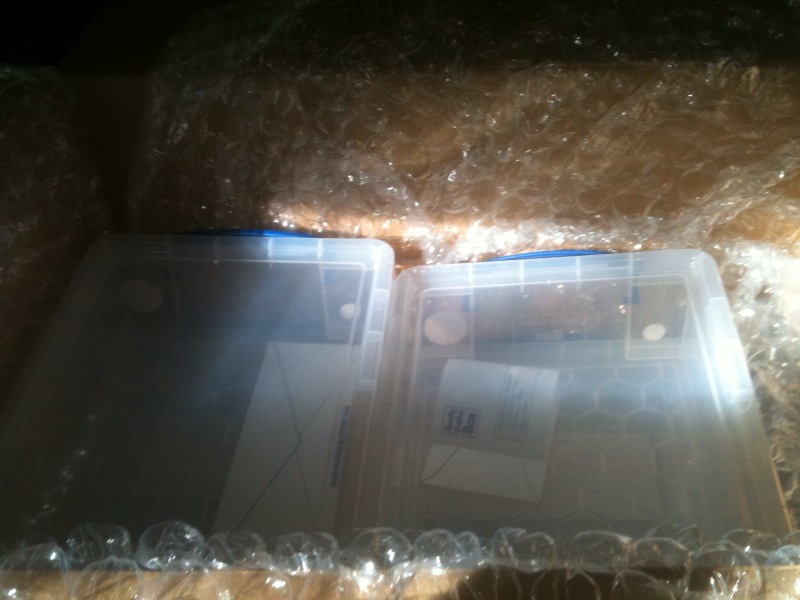
The appearance of the Really Useful Box means Russian Reserves are arriving to the North of the Great Redoubt.

Eugene's men continue with their attempt to take Borodino by storm, while a Russian Dragoon regiment advances boldly... perhaps rashly, in support of the embattled Jagers!

Some of the Russian Opolochenie advance in support of regulars of Tuchkov's Corps, which has been hemorrhaging morale points in the face of the determined Polish advance!

Russian Combined Grenadiers move up to support the artillery holding the Fleches.

Crunch time at the Great Redoubt, and the French and Russians battle it out with musket ball, cannister, and bayonet!

Tolstoy's Corp moves up to threaten the right flank of Eugene's advance.

More close action between Raevsky and Ney at the Great Redoubt.

The French are assaulting the second town sector of Borodino... and none too soon as a fresh Russian Corps has been committed from the Reserves to hold the Northern flank of the Battlefield. Meanwhile, Borozdin (Michelle) is heard begging for more infantry to help hold the Fleches against Davout!

The second Town section of Borodino has fallen, but the Guard Jagers, the alcohol from the previous night's exploits having finally worn off, repulse the first assault by the Mecklenberg-Schwerin regimnent.

Davout (Andy and Travis) is threatening to roll right over the Fleches!

Note the white coated Spaniards of the Joseph Napoleon Regiment at the rear of the attack!

Some of Nansouty's (Dave M) cavalry look for an opportune moment to charge home of Tuchkov's infantry in support of the battle-crazed Poles! Tuchov's command has already run out of Moral points, and has been paying them to Poniatowski for some time.

Jamie moves up masses of fresh Russian infantry in the Borodino sector... the Guard Jagers are still holding on to the final town section.

Montbrun's cavalry hope to sweep away the (entering) artillery of the Russian Army Reserve before they can effectively deploy and blast them halfway back to the river Nieman!.

The Russian Combined Grenadier units try to take back the Fleches.

View from the rear of Eugene's Corps looking towards Borodino.

The Italian Royal Guard, stationed in Reserve, are at the rear of the right half of Eugene's Corps; across the swift flowing Kolocha river great masses of Russian infantry are seen advancing at the quick-step.

Dave S. and Brian are looking for something?

Davout takes advantage of a Lull in the action to move his guns forward.

The men of the Mecklenburg-Schwerin regiment succeed in theire second charge, routing the last unit of Guard jagers and forcing them to surrender. Borodino has fallen! Holding it may be another matter, though, as Russian infantry reinforcements start to pour across the bridge.

The Russians are very hard pressed before Utitsa; note the Opolochenie unit forming a "hedgehog" square!

The Russian Reserve artillery has managed to deploy in the center, but... so has the French! Junot's small VIII (Westphalian) Corps is rumored to be ready to enter in support of the somewhat overextended cavalry.

A valiant unit of Russian Dragoons tries to buy time by charging some of Davout's infantry.

Ney's attack on the Great Redoubt continues to grind down the Russian defenders, but the coup de grace seems to evade his men.

Eugene starts to deploy to mitigate the threat from the Russian reserves which entered just South of Borodino.

Looking from Ney's positions near the Great Redoubt South towards Utitsa - quite a sight! Russian cavalry has crossed the stream threatening the just recently rallied troops of his left 2 divisions. Hugh had suffered heavy losses from concentrated artillery fire from son, Zach. He is down to just a few remaining Morale Points, but has been told that the four excellent regiments of the Vistula Legion will be arriving momentarily form the Reserve. Hang in there, Jaques, Pierre and Francois!

Eric has moved up a reinforcing Infantry Division, and this leaves the forces on the far North of the battlefield at a relative stand off, while rumors of Cossack hordes still further North continue to cause concern.

Overview of the Borodino sector, as the Russians engage in their favorite diversion - firing masses of Artillery at the French!
At this point, both sides had played completely through their sequence decks, and it was 12:30 AM - five hours of fairly intense game play. There was a lot of play left in the game - another 3 hours at least, I'd say. While I would have gladly continued playing (where is the rest of the LA Piquet crowd , whose motto is "we never ever give up", when you need them?), considering the need for take down time and commitments the following day, we reluctantly called it quits with "Advantage - French", and started the long job of packing it all up. This was immensely helped by the kind assistance of a great many of the players. A big thank-you to a great bunch of guys (and gal), as well as Joe, Roger, and Greg; without ALL of you, such an ambitious game would be impossible for Barry and I to run!
Peter
Addendum July 30, 2012:
There are some more great pictures and additional narrative on Barry's blog at:
As always, Gabriel took some great pics; taken from his Historicon Blog post at:
(which has many more great pics):
Here are a couple of overview shots from MSJ_1's Flickr photostream. His whole HCon slideshow is at:
They do a nice job of showing all the players/GM's (That's me in the blue shirt with white stripes).