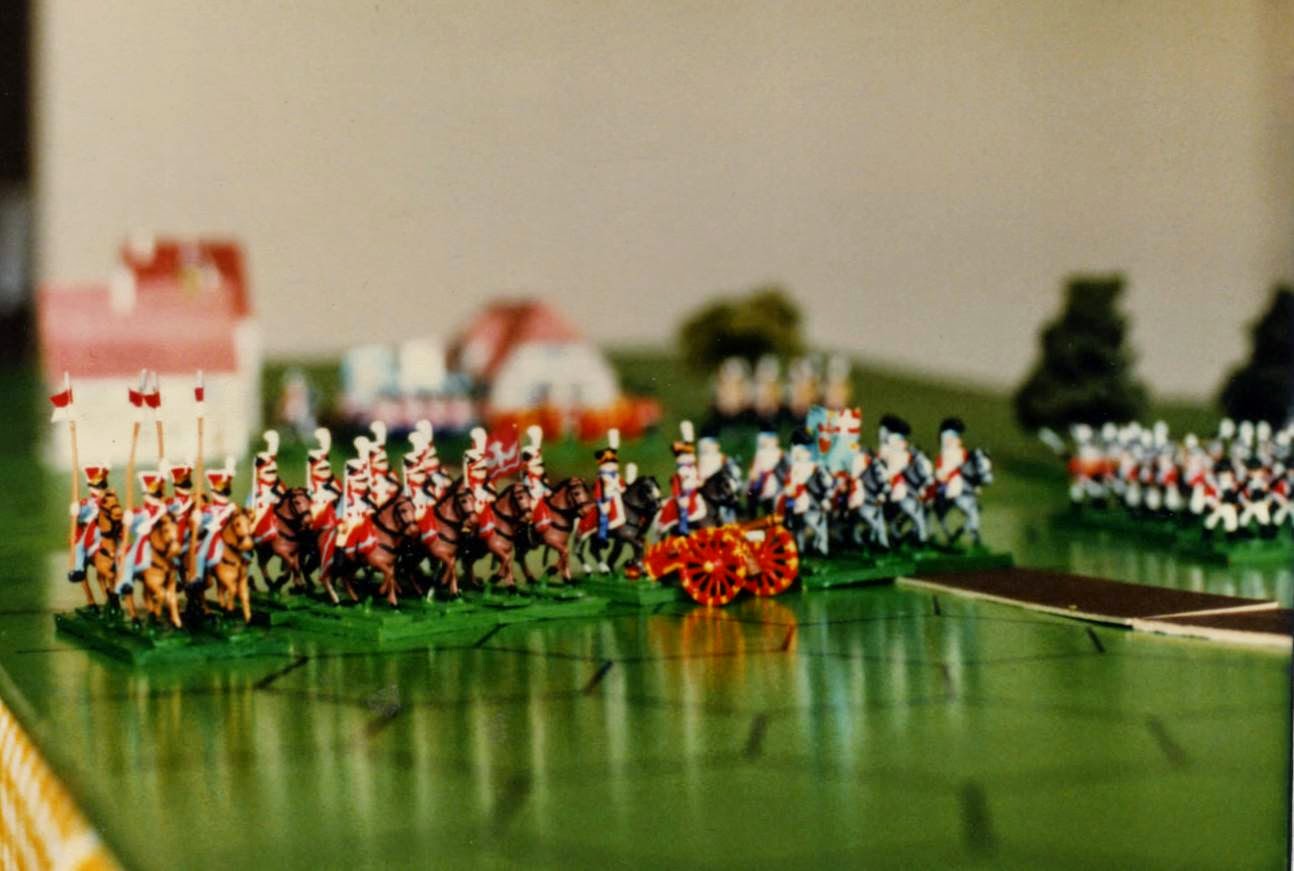
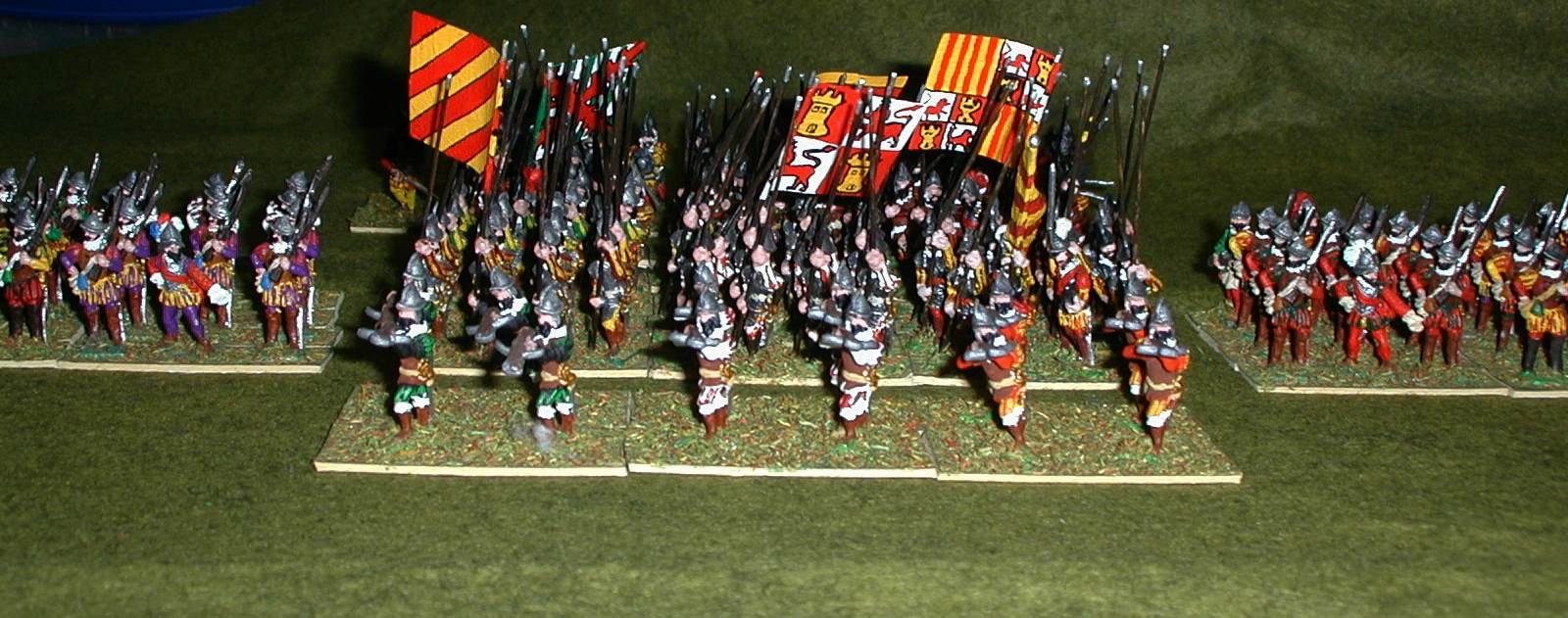
Showing posts with label Dice and Tin Men. Show all posts

Saturday, December 26, 2020

Influential Books

    Herein I am following a theme started by a blog post by Nundanket on his Horse and Musket Gaming blog  about 2 weeks ago, in which he cited two or three books that have been the most influential on his wargaming life. Since then, several of the blogs that I follow have picked up this theme, and I have found each and every post in this regard most interesting. This prompted me to add my own offering to the theme, which follows forthwith! 

   For as long as I can remember, I have loved books, and was a voracious reader. Similarly, I have always loved games and been fascinated by history. Unlike many others, I was never much interested in either modeling or playing with toy soldiers... until an act of serendipity! As I have related previously in my series of posts, "Of Dice and (Tin) Men", which starts here, I was browsing the stacks at our well stocked Public Library, a very frequent pastime of mine as a boy, when I came upon the book that changed my life, at least in the wargaming sense. I was an avid chess player as a boy, and was looking for books about chess strategy, when I chanced upon the tome below:


The Library copy was of course in pristine shape. I was thrilled acquire this copy form the library of a family freind, Dr. Edward Schortmann, years later. Like the Velveteen Rabbit, it has been well loved! 


    This book, published in 1962 and read by me circa 1966, revealed the world of miniature wargaming, of which I had previously been completely unaware. In simple but exciting prose, Mr. Morchauser set forth the background of wargames, their key principles, the types and kinds of miniature figures then available, and how to obtain them, and three closely related sets of rules for what he termed the Shock Period (antiquity up to about 1700), The Horse and Musket Period (1700 - 1914), and the Modern Period (World War 1 and beyond). I was hooked from the first pages, and have never looked back since then! 

    It turns out that Joe was the editor of LOOK magazine, a major US magazine published in large format that used striking pictures to covey much of its stories. Its coverage of the Civil Rights movement and the Vietnam War was particularly influential. He even managed to get an article published in LOOK about Wargaming in 1960There are a number of articles by and about Joe on the Tabletop Talk site (TT was the title of one of Jack Scruby's several wargames publications). Joe attended Bard college in Dutchess County, NY, and settled in Puoghkeepsie,NY; both of which are within an hour or so's drive from both where I grew up and where I have worked the past 36 years. While at Bard College, Joe was exposed to Professor Gerard de Gre, another of the "Old Guard" of  Historical Miniature Wargaming, and that ingirted his interest in the hobby. It turns out that Gerry became the regular wargames opponent of Charlie Sweet, who I was privileged to meet at the end of 1973, courtesy of my (then new) wargames freind, Joe Fish. There is more about Charlie in the "Of Dice and (Tin) Men" series, and an upcoming blog post. 

    Curiously, I have never played a game with Morschauser's rules. Considering their pivotal role in my personal wargames history, this is a deficiency I plan to remedy shortly. Stay tuned to these pages; I have at least a couple of such games in the pipeline!  :-)


    The second book was also a somewhat chance encounter. Not long after discovering How to Play Wargames in Miniature, I was reading the Book Review section of the Sunday New York Times. At the time, the entire Sunday Times weighed about 5 pounds, and unlike most guys, this was my favorite section; I never even looked at the sports pages, LOL! This particular Sunday, there was a review of a book about Napoleon. I realized that I knew next to nothing about the man; in US schools, he receives brief mention as the successor to the French Revolution, his involvement in the Louisiana Purchase, and the background to the War of 1812, and that's about it! It is little wonder that Americans in general are famously ignorant of World history. In any event, my next trip to the Library resulted in my taking out several books about Napoleon, but the key one was The Campaigns of Napoleon, by David Chandler.  


Another find in the Public Library; this is my personal copy, acquired many years thereafter.


    This book of course requires no real commentary when talking to any wargamer with even a passing interest in the Napoleonic Wars. I read the book from cover to cover (1,000+ pages) in less than a week. After that, I checked it out of the Library at least a dozen times over the years, probably more! I was fascinated with the man himself, and the incredible scope of the Napoleonic Wars, and the countless nations and personalities involved. It certainly cemented a lifelong focus on the Napoleonic Wars for my Wargaming activities. My current Napoleonic Collection is nearly 8,000 figures, and  will top out well over that in the end. I must have over 100 books related to Napoleon, the Napoleonic Wars, Napoleonic Uniforms, etc., but if I could keep just one, it would be this one, ands down!


   My first armies were 25 mm painted flats from Aloys Ochel in Kiel, Germany. I found the black and white pictures of the flats in Morchauser's book very appealing, and had little confidence in my artistic abilities. The cost of the figures was very reasonable as well, and the catalog was reasonably easily understood with teaching myself a bit of German. However, over time I wanted more control of which regiments were depicted. That was fueled by the next book.


My copy, acquired circa 1970. The quality of the bindings wasn't great, and there are inaccuracies, but the volume of information and the artistry were and are superb for the price!


    One of the great things about Joe's book was the listing of manufacturers and wargames periodicals. I quickly subscribed to the old NEWA Courier and Don Featherstone's The Wargamer's Newsletter, as well as Jack Scruby's on and off again publications. In one or more of them  there was a review of this book, which I purchased immediately. The variety and color of Napoleonic uniforms depicted was astounding!  I sold all my flats and started building and painting armies in 25mm, chiefly wargames figures by Jack Scruby, augmented with a few Hinton Hunt figures. 


This second volume came out a year or so after the first. 


    With the help of these illustrations (and teaching myself to read some very basic French), I settled on the French and Austrian Armies as my primary forces, augmented by some Bavarians and Russians.  All manner of Confederation of the Rhine troops followed, along with Portuguese, Brunswickers, Danes, Swedes, Prussians and more. My original flat armies were French and British, but I didn't paint any British figures for almost 30 years after that! However, they were eventually added in due course, followed by my Spanish Napoleonics a few years ago. I still plan to paint hundreds more  Napoleonics in the next few years. Lead addiction is a real thing, as many of us can attest. 


My favorite centerfold.  Well, almost!  :-)


    Many other periods and armies have followed, as chronicled here on my blog, but Napoleonics have always been my first love. With the inspiration provided by the paintings of Fred and Liliane Funken, it is easy to see why! Thank you, Joe, David, Fred, Liliane, and countless others for the joy of this somewhat eccentric but glorious hobby of ours~!

Sunday, October 5, 2014

Of Dice and (Tin) Men: The House of War

My plan all along was to return to Connecticut after I finished my Residency training. I figured that I would join an existing medical group. My wife (also from Connecticut) and I had pretty much decided that we wanted to settle either along the shore East of New Haven, or in the hills of Litchfield county. Rather unexpectedly, I wound up assuming the practice of an older physician who was relocating. Pretty much day 1 of my practice, I was admitting patients to the hospital, and using the full scope of my training (aside form obstetrics). I was also on call 24/7, seven days a week. That lead to very  little gaming or painting taking place for several years (although the condo we rented had a full basement and I had a ping pong table for gaming). One of the early viistors to the practice (on a social call, rather than medical!) was my old wargames freind from UConn and beyond, Joe Fish.


The newspaper covering the center of the ping pong table on this somewhat faded photo means that it was taken in the living room of the 4 bedroom condo I shared with three other students during my last three years of medical school; most likely in 1983 We didn't use the living room of the condo at all and had virtually no furniture in it, so I kept the table folded up in the corner, and took it down only for games. The opponent was likely either Joe Fish or Dave Sweet. 


A shot of my Minifigs Danes from circa 1983 deployed non the kitchen table of our appartment in NJ on one of the hex gridded 2 x 3 foot panels of Masonite with the self adhesive hex grid sheets (sold for use with the  Frappe! rules back in the early 1970's). 


    Within a few years we had added two daughters and moved to a house, and I finally had a call group to ease the workload some.  A full basement for gaming was of course an essential requirement for the house! My in-laws contributed a second, no longer used, ping pong table. In my down time I then constructed an unnecessarily massive tabletop to go over the ping pong tables and also raise the table height up another 5" to a more comfortable height for use while standing (I am 6'4" tall!). In  the process I also accommodated one inconveniently situated support column for the house.The final table was (and is) 20 feet long by 6 feet wide.


Probably one of the first wargames played in the basement of our new home, using the original (hex gridded) version of Legio Quarternarius. The back of the picture reads "Battle of the Adopted Dunes, March 16, 1985". Note the many red "death shrouds"!  The Adopted reference is probably to my friend Charlie and his wife having adopted their first child. Armies are Mauryan Indian and Carthage, I think.


Now having a 20 foot long wargames table, I did a "Grand Parade" of my entire Napoleonic Collection. Sadly, the pictures came out way too dark. Digital photography is much easier - you see the shots right away and re-do them if they come out poorly! 


Lots of troops even then!


Another shot, Allies to the left, French and their satelites to the right. 


Troops stretch as far as the eye can see, and beyond!  This was circa 1988.


This was the age of GeoHex (introduced circa 1984, I believe, and produced through circa 2003), so I gradually acquired almost all of the sets, and made some awesome looking miniature battlefields - the base level of the table was painted medium blue to use with the Geohex (streams/rivers/shoreline), as well as for Naval games.

Some of the many pieces in a GeoHex set

For those of you unfamiliar with GeoHex, it is based upon large rigid Styrofoam Hexagons, 12" across parallel sides, some with roads printed onto them geographically. The slope side pieces gave 1,2,3,4,5, or 6 vertices of the hexagon shape, with an additional long thin piece. Anyway, it is possible to make some really wonderful tabletops with this stuff. It is however, rather time consuming to plan out and execute a layout, especially when also using the supplemental sets that straighten the table edges, add steep slopes, and so on. 

My original Renaissance armies on GeoHex terrain.


Swiss pikes on the hill.


Two Spanish Tercios with supporting Organ guns.


Better shot of the Swiss.

Mounted crossbowmen and Arquebusiers; walls from the Hovels "Spanish Village" set. 


Artillery and foot Arquebusiers.


    Once we had the basement and table set, my house became the site for the 3 to four games a year that I could coordinate with the other 3 guys of my original warganes group all of whom were within about an hour's drive in various directions. We played a lot of Legio Quarternarius, including some round robin very informal tournament type actions, using various early (Assyria - Republican Rome - Macedonian - Carthage - Mauryan Indian)  or late (Sassanid Persia - Palmyra - Byzantium - Teutonic Knights) army groupings. 

    We continued to play Napoleonics, and tried out some of the "new" wargames rules, including Napoleon's Battles by Bob Coggins and Craig Taylor. While I liked some of the ideas in NB, overall it wasn't my cup of tea. Charlie liked the rules a lot, however. Since the table and almost all of the figures were mine, you can guess whose opinion won out! I had the pleasure of sitting opposite Bob Coggins and alongside Jim Getz (Empire, Napoleonique) and his wife at a Chevaliers de Neptune ("Don't ask!!") dinner hosted by Bob Jones at Historicon in  (Lancaster, PA) in 2003.  Quite lively conversation, most of it having little to do with either wargaming... or the Napoleonic Wars!


The original version of Napoleon's Battles (1st edition published 1989), the first attempt at really widespread marketing of a miniature wargame, distributed by The Avalon Hill Game Company, the giant of the military board games industry.  Sadly Craig passed away in 2012, and Bob passed away suddenly a few months ago. (Image from Boardgame Geek).

Meanwhile, we continued with our ever changing house Napoleonic wargames rules, which I termed "Code Napoleon". Those reached their final evolution with two developments. One was the publication of Don Featherstone's "new" wargames book, Featherstone's Complete Wargaming in 1989, and an article by Brent Oman in the Midewst Wargamer's Association Newsletter at about the same time.


This book of Don's holds an honored place in my collection, (along with several others), also published in 1989. Those only familiar with Don's much earlier rules will be surprised to see the evolution of his ideas in this one! I also had the pleasure of meeting Don in person at Historicon ? 2008, courtesy of an intro by Jim, Getz. At age 88


 From Don's chapter on the Napoleonic Wars came the idea of replacing many of the traditional modifiers for combat with a grid based upon the formations of the attacker and defender, one each for fire and one for melee, and rolling a D10 to determine the outcome. From Brent's article came the idea of using different Polyhedral dice for different troop quality - the bigger the die type, the better the troops... so Militia types would roll a D6, Conscripts/Raw troops a D8,  Regulars a D10, Crack troops a D12 and Guards a D20!  I'll present those rules, which I named Code Napoleon, in the next post of this series.

Sunday, May 12, 2013

Of Dice and (Tin) Men: Europe Way back When

   I wound up being accepted into the Family Medicine Residency at Somerset Medical Center, in Sommerville, NJ, and started there in July, 1981. I was happy to be in this program, in a medium sized hospital affiliated with Rutgers, where the Family Medicine residents were the only house staff. Having seen the way things worked in a University hospital setting, I was convinced that a program where the Family Medicine residents do *everything*, all the time was a much better experience than one with excellent teaching but a lot more watching than doing; nothing subsequent has made me change my opinion in that regard. In any event, as a first year resident, on call in the hospital (and up most of the night) at least twice a week overnight, there really wasn't much time to do much except work, eat, and sleep. By now I was dating my future wife, to whom I proposed during a trip we took together to the Shenandoah valley. Of course, stops along the way included Gettysburg, Harper's Ferry, and New Market, along with the spectacular caverns in Lurray, and of course the Blue Ridge Mountains national park for some hiking. She accepted, perhaps unwisely, LOL, and we got married in August of my 2nd year of Residency. We're still happily together after 30 years, so she has learned to put up with me... and my "Marching Men", as she calls them. Long live the Empress!

   My first year in training, I don't think I painted anything... I was just too tired!  I did get together with my original CT group about once every 3 months for a game, but even there I had to be careful - I nearly fell asleep driving to game on Saturday once, having been up all night on call the Friday before; when you're on call every 3rd night, you pretty much are either on call Friday night, or are on call and work all day on Saturday or Sunday, so there's really no good time to travel! Anyway, the only other gaming I did that first year was a play by mail game of trade, exploration and conquest based in Europe and the New World during the age of exploration, set circa 1500, "Europe Way Back When". This was at a time when personal computers were rare, and very few people indeed had email, so it was all postal. Joe Angiolillo (see the previous post in this series) had nominated me to fill a vacancy in the game, so I commenced with playing the Golden Horde (Mongols). I reorganized and revitalized the Horde, and after a few turns was nominated and promoted to assume the control of the Hapsburgs. I think that by electing an inexperienced player to fill the vacancy of a powerful state, the other players thought that I would pursue a relatively passive approach. Hah!


    Now, if you know anything of this era, the Hapsburgs were probably at about the height of their power then. In addition to their holdings in Germany, Austria, Bohemia, Hungary and Italy, the Low Countries were also part of their empire. Thus, along with Vienna, Prague, Budapest, etc, my territory also included the great cities of Amsterdam, Rotterdam, Brughes, and Brussels, among others. The design of the game was such that in the early years, the focus was on European resources and conflict, but seafaring nations could also launch exploratory expeditions to progressively further areas, as nearer once became "known". These expeditions were fairly expensive to undertake, requiring several ships, troops and cash, but had a good chance of finding new colonies, which could be founded (requiring additional transport, time and expenditures of course). There were a number of different kinds of colonies that it was possible to find, the types of course depending upon the region. Each type had their own characteristics and products, ranging from timber, to furs, to tobacco, sugar, spices, silk, etc. The success of these expeditions was determined by the stock market - one selected one of a dozen or so stocks for each expedition, and looking up the numbers for that stock on the day that the expedition was slated to return determined what if anything was found, and any losses suffered by the expedition; it was always exciting waiting to see what your intrepid explorers would discover.... and of course some expeditions vanished without a trace!

    My predecessor as Holy Roman Emperor had pursued a European Military strategy, and largely neglected exploration. This had been successful in the short term, but the design of the game was such that it was clear that failure to find, establish, develop, and exploit colonies would lead to major decline in the long haul. Thus, the Low Countries became the scene of intense exploratory activity. I had to do some horse trading with other sovereigns to kick start my New World territories, but before long I was an active competitor in North America. My explorations turned up a number of colonies in the South (Richmond, Roanoke  Charleston, etc) which produced Tobacco. This particular commodity was handled in a unique way when consumed back in Europe (which is when revenue was generated from the production of luxuries). The first resource of its kind consumed in a given city was only worth 500 gold pieces (very low - the highest fixed value assets were spices, aromatics and silks from the far East., at 5,000 GP per), but each additional resource of its kind consumed in the same city was worth 500 GP more, so the second was worth 100, the third was worth 1500, and so forth. All told, the maximum possible tobacco production from all colonies was 36/ year (turn). A given city could only consume two resources per unit population (? about 50,00 citizens?) per year. At the time of my ascending the throne as Kaiser, my largest city was Brughes, with a population of "5" (250,000 souls), and that was among the largest in Europe. The population of your cities could be increased by (of course) expenditures of money and resources, especially food. Larger cities generated more income, resources (for example, the Low Countries tended to produce Alum, needed, along with wool, to make the luxury Cloth) and troops, although having more, smaller cities was easier and cheaper to do.

    Anyway, to make a long story short(er), I managed to acquire ALL of the Tobacco producing colonies, and gradually increase the population of Brughes to 18 (900,00), easily becoming the First City of Europe, so that it could consume the entire 36 units of tobacco produced each year all by itself - the 36th unit consumed was thus worth 18,000 GP, and the average value of a unit of tobacco consumed at Brughes was 9,250 GP. Thus the entire crop consumed in that fashion yielded revenue of  333,000 GP per anum, a staggering amount. I had a lot of fun with this game over the course of about 5 years, before it finally died out due to declining player participation.

    The game required a lot of careful tracking of provinces, cities, towns, ships, colonies, resources and gold, as well as verifying the moves of two other players. Initially, I did this by means of a set of color coded index cards, one for each province or colony. Later, in 1984, I got my first computer, an Apple IIe. I had taken the first course for Computer Science Majors my last semester at UConn as an undergraduate; it was probably a good thing I didn't take it until then, as I really enjoyed it a lot, and might thus have gone into Computer Science as a career. As a result, I wrote a program in BASIC for the IIe to track all the above in the form of a linked list, which worked great. My next PC was a Windows machine about 10 years later, and it is perhaps not surprising that one of my two favorite computer games of all time is Sid Meir's COLONIZATION. (the other is the Heroes of Might and Magic series, especially HOMM 3).

Sid Meir's Colonization Screenshot from Wikipedia

        When I was in my 2nd year of Residency in Family Medicine, things were much better. Call dropped to  one night in seven, although it included primary responsibility for the ICU and CCU patients. By the third month in, I was also married, and that was going great, aside from the times when I wasn't home due to work. The enjoyable distractions of a new wife aside :-), I started painting again. Doubtless in part from my EWBW exposure, the next force up was a Renaissance Spanish one, using the oddly atmospheric 25mm figures by Hinchliffe (although their clothing style is really more appropriate to the period shortly before the Armada than the era of the Great Italian Wars). Of course, I still hadn't found a set of rules for the era that I liked yet... but when did that ever stop a wargamer from collecting a new Army?


A Spanish Tercio, with skirmishing Crossbowmen to the front, with Pikemen behind, Arquebusiers on the wings, and Sword and Bucklermen behind in support.. 


All of these are 25mm Hinchliffe figures.


That's 48 Heavy Pikemen, 48 Medium Pikemen, 48 Arquebusiers, 12 Crossbowmen, and 20 Swordsmen - 176 figures in all!


A rear view of the formation. 


...and a final side view.; King Carlos would be proud!

Sunday, February 17, 2013

Of Dice and (Tin) Men: The Thursday Night Group

    The second year of Medical School was a little easier, as the subject matter became more clearly relevant. Also, one of my classmates and I rented out a nice four bedroom condo right across form the Medical School (in suburban Farmington)... well actually, it had three bedrooms, plus a somewhat odd open space upstairs, evidently meant to be a family room or study. Mike and I erected wall sections between the pillars and installed a door, converting it to a 4th bedroom. We sublet the other two bedrooms to two incoming first year students, one of whom turned out to be from my home town. All three of them were good guys, and we got along very well, sharing cooking and shopping duties, and living in a very nice place for much less than it would have cost us for a dive somewhere else!. By this time, my friend from back home, Paul, had graduated from Lafayette college with a degree in Mechanical Engineering, gotten married, and was living in nearby East Hartford after taking a job with aircraft engine manufacturer Pratt and Whitney.

   I did manage to get over to visit Paul and his wife about once a month. My Napoleonic figures were all back home, but I had my English Civil war Armies with me, plus my burgeoning number of small Ancient armies (see "Legio Quaternarius", the prior post in this series). We play tested a few sets of Pike and Shot rules over at his place - using Gush's WRG rules, Cavaliers and Roundheads, and Bill Protz's rules for the ECW. All of these were OK, but none of them really quite "did" it for us. Indeed, I would ultimately have to write my own Pike and Shot rules decades later (Band of Brothers, 2nd edition, with Ken Baggaley and much hesitance from my good friends, Jope Fish and Gavin Shanks) before finding what I really wanted in a set of rules for this period.


Some pics of my Mimifigs ECW  troops from the 1970's in action.


The Royalist army deployed.


With the forces of Parliament opposite.


The armies close!  IIRC, these pictures are actually from a game Joe and I played about 10 years ago, using "Anchor of Faith" by Piquet. 


Paul and I played our games first with the WRG Renaissance Gush rules.


View from behind the Royalist lines.


And from the Parliamentary side; gotta have hedgerows for an ECW battle!


Next we tried Cavaliers and Roundheads - a lot more bloody and decisive, but still not really what we were looking for.


The Cavalier cavalry attempt to drive off some Roundhead Dragoons. 


Closing to Musket range...


Bill Protz's rules came the closest (I have the blue covered 1st edition) to what we were looking for. 


The King's lifeguard about to charge with a swamp to its flank.


    At the end of the second year of Medical School, they again gave us 4 weeks to study for Part 2 of the National Board exams. Having learned from the previous year, this time I painted for three weeks and studied for 1 week (and did even better). That completed my core Ancient Armies for our gridded Ancients rules (Assyrian, Carthagenian, Republican Roman, Macedonian, Indian, Palmyran, Sassanid Persian). These armies saw a lot of play over the next 20 years. I even had Dave Sweet himself over to play a few times and he enjoyed the games and their tribute to the rules he and his dad had devised.

    The third year of Medical School was a huge improvement; a bit of an intimidating shift from the classroom to the bedside at first, but it rapidly became clear that I absolutely had made the right choice. Indeed, I was a bit surprised to find that I really enjoyed interacting with people, and quickly discarded any plans for a career focused on Research. I also became quite impressed with the ability we physicians had to harm people, not necessarily through errors or outright malpractice, but just in the everyday performance of our job; not even the most beneficial interventions are without some risk (well, except perhaps for eating better and keeping your weight down!). Although some rotations were certainly stressful and time consuming (making rounds at 6:30 AM with the surgeons on patients who were half asleep was interesting - I think they kind of preferred it that way sometimes, as they were too groggy to ask many questions, LOL!), overall it was vast improvement from the first two years.

    Around this time (start of my 3rd year of Medical School, 19880), Dave Sweet finished Law School and moved to the Hartford area to start his Law practice, and Joe Fish finished his tour of duty with the Army. My good friend, fellow wargamer, and former college roommate, Chuck, also wound up transferring to the University of Hartford from UConn, and took one of the rooms in our condo when one of the other medical students married and moved out.  I ensured that he actually graduated this time! As a result, Chuck sent me Mother's Day cards for about a decade there after as a funny way of thanking me for getting him through college. It certainly confused my future wife the first time she saw one come in the mail, LOL! Thus I was fortunate that  just as I stated to have some free time again, many old gaming friends were now available as well.  We played some Ancients games and some Starfleet Wars games in the unused Living Room of my condo over that time. I also enjoyed the classic FLGS, "War and Pieces" in West Hartford. Even back in the pre-internet era of the late 1970's, I tried to support the store by doing my large figure orders through them, but gave up as it seemed like they felt it was more of a chore than it was worth to them (which may have been true, I suppose). In any event, it was a fixture of the Connecticut gaming scene for more than 25 years. I was sorry to see it close in 2007.

    Dave Sweet also started up  a continuation of a Dungeons and Dragons campaign he had run in college, based on a sort of alternate late 1600's version of the islands off the coast of Maine (where Dave had worked as a camp counselor for several summers), centered on the island of Matinicus. Among others, this group included another of the former seniors from the original UConn wargames group, Rocco, now a newspaper reporter, the current State Insurance Commissioner (a pretty good contact for a future physician, LOL), and Joe Angiolillo, who has a number of boardgames designs to his credit. Eventually, it worked best for everyone's schedule that we customarily met on Thursday nights, thus becoming known as "The Thursday Night Group" (TNG), particularly in the annals of the broader events of the campaign World that Dave kept. The local ruler, the Archduke, the relic "The Iron Poker of Viazzo", and the calamity known as Taraka the Rakshasa stand out particularly from that time. One of the guys ran a "true" neutral (i.e., it's all about me, the rest be damned, LOL) character named Mark Rudd, after the activist of the same name. During the devastation accompanying his visit, Taraka gave Mark a powerful but dangerous magic item (a wand of Plague, I think), solely on the grounds that, as a true Neutral, he was bound to use it in a fashion that increased the misery in the world, thus serving the Rakshaka's ultimate purpose! He was not mistaken, as I recall. Joe Mike, who usually hosted the games at his home, had a Ranger as his main character, "Arrowsworn, son of Arrowroot", ior something like that, who was prone to lethal encounters. We used my collection of 25mm D&D figures for these games, and my Ranger figure was painted in a fashion that (inadvertently - I am NOT a baseball fan at all) bore a very striking resemblance to the Cincinnati Reds slugger, Pete Rose. As a result, the character was generally nicknamed "Pete Rose" during play!

    This was classic D&D, and thus most characters had a short lifespan; resurrection and reincarnation were often necessary to preserve characters of any reasonable level. My primary characters were Puremoon, a Lawful Good Cleric, who ultimately attained 9th level with the assistance of the local authorities. The area had become severely depopulated over the years by a series of disasters (the immense Tidal Wave created when the Iron Poker was used to create "Poker Bay" being only one of them), and the "magical" appearance of the Faithful Followers of newly raised Primates were one of the most efficient means of restoring the population! My other reasonably successful TNG character was a Fighter, who was reincarnated as a Griffon; this turned out to be very useful, and "Fleetwing" ultimately became a Baron, leading a large colony of Griffons established in the environs of Puremoon's castle! The only other memorable character of mine form that time was another fighter, Tisai the Dwarf; he was so named in response to the frequent request by creations of the DM to announce oneself. "Who goes there?" "Tisai, the Dwarf!".  Needless to say, this eventually annoyed the GM sufficiently that the character ultimately came to a Bad End.

    As I mentioned, Joe Angiolillo, one of the TNG, was a board game designer, who worked for SPI, Coleco, and was one of the four founding members of Nova Designs, which originated as Gameshop. Joe's contribution to the founding of the company was a fascinating game based upon Norse Mythology, "The Hammer of Thor", which members of the TNG helped playtest a few times. I thought it was a hugely creative game, and one that made use of a massive set of cards, many of which triggered events based upon Norse Mythology. However, it needed to be severely streamlined so as to play out is a reasonable period of time. I actually think this would be a great game to re-invent now as a PC game!


    The other game that Joe was assisting on a design for at that time was Axis and Allies, released by Nova games in 1981, and subsequently picked up by Milton Bradley. The only comment I made about this engaging game in development when we tried it at a session was to streamline it so that it would play to completion within 3-4 hrs, about the maximum for a game session, even for students!  They wound up decreasing the number of territories on the map by about 40%, IIRC, and that more or less did the trick. I must admit I like the game much better with the plastic miniatures provided in the MB Gamemasters series version.


Finally, another game produced by Gameshop/Nova was Al Leonardi's revolutionary design, "Ace of Aces". I must have been able to make it to the MFCA wargames convention in PA in 1980, probably the last convention I was able to attend for almost 20 years, because I remember seeing EVERYONE there playing this game. I bought a copy and Chuck and I played at least one flight (which only takes 15 minutes or so on average) daily over the next 6 months or so; I still have my 1st edition copies. Chuck had a better sense of spatial relationships, and would usually shoot my plane down three times out of four! It is hard to describe the game system if you have never seen it, but basically your planes start out facing one another at a distance. Each player then chooses a  maneuver, which gives them a page number to send their opponent to, whereupon both flip to the indicated pages, which shows a drawing of the enemy plane in relation to yours, and the process repeats. If your opponent maneuvers such that your plane is in his sights, you are shot down! It is an incredibly fun and fast paced game, which is being re- released.


    I also recall a game or two of Empire 2 at Joe's home during this time, and purchased both that and the 3rd edition when it came out in 1981. The third edition really seemed to go overboard with added layers of complexity. I have since had the pleasure of sitting with Jim Getz (co-author, with Scott Bowden) several times at dinners arranged by Bob Jones at various Historicon conventions. Suffice it top say that he has long since moved past Empire (Jim is a very creative individual when it comes to novel ideas for wargames, including the Horizon Movement concept of about 10 years ago). 


The box was really pretty, and the rules well produced, but for me they exceeded the complexity tipping point - and at this point, I was just beginning to exit my long phase of favoring complex rules. (Image, as well as others of rules in this post, is from Boardgame Geek) 

That is it for now... good gaming, all!

Peter

Sunday, January 13, 2013

Of Dice and (Tin) Men: Legio Quaternarius


    My first two years of Medical School saw very little gaming, especially the first year. Not that there is anything surprising about that when you have classes from 8AM to 5PM Monday through Friday, and 8-12 on Saturday as well. During the brief times when I was home on vacation, I still got together with the hometown crew, chiefly for D&D, and later our new Sweet-inspired Ancients rules. Like most medical students, I think, I found these years a bit depressing; you are just about literally force fed a tremendous amount of information that it is absolutely impossible to really master. Is there any physician out there with *good* memories of learning the damned Krebs Cycle and related esoterica?  You can do it, otherwise you wouldn't have been accepted in the first place, but many, including myself, start to wonder if you really made the right choice. I also found that I really didn't care much for about 80% of my medical school class of 80 students; I really can't fully  explain it, but so it was. Indeed, many years later I attended my 25th class reunion, along with my wife. I had an OK time, but commented to her afterwards, knowing that the few people I would have enjoyed seeing wouldn't be there, "OK yeah, now I remember - I didn't really like most of these guys much back then, either! The four of us who had been UConn undergrads all got along well; three of us were Chemistry majors, and one, John,  was also a fellow Marching Band and Band Fraternity (Kappa Kappa Psi) member, and my closest friend in the class; not a gamer at all, though.

    That year also saw two of the biggest snowstorms in Connecticut history, closing down the highways for several days not once but twice (four wheel drive vehicles were rare in those days); the first one actually resulted in our end of term exams being rescheduled. The second storm placed so much snow on the roof of the Hartford Coliseum that it actually collapsed! Fortunately, it was very early in the morning, and no one was inside. My good friend from college, Tom, was then working in Hartford, having gotten a jopb with Price Waterhouse, one of the (then) Big Ten national Accounting firms. He was commuting from an hour away, so he got stuck in the city during the second storm, and stayed overnight with me for a day or two while we waited for the snow to be cleared away. In the course of the visit, we were sitting in my living room, and Tom observed a large plastic baggie containing a non-descript green/yellow/brown mixture. Now, understand that both of us were relatively liberal politically, but personally quite conservative with regard to our own lives and conduct. "Peter, not you too?", he inquired, obviously thinking the bag contained some kind of "funky herbs". I was a bit perplexed at first, and then I realized what he was referring to. I laughed and said something like "Not hardly!", and showed him it was the flocking mixture for my bases! Good thing it wasn't a cop, I suppose, LOL!  Even better that no one tried smoking the Woodlands Scenics flock!

    Anyway, the one good thing was that at the end of the first year, they gave us four weeks off to study for part I of the National Board exam. Now, I knew myself well enough to know that anything that I hadn't learned already that I reviewed more than 2 weeks before the test was pretty much a waste of time. So, I used the first 2 weeks of to paint non stop!  :-)  Most of my first Ancient army, using the new (and still quite excellent castings, even by today's standards) 25mm Minifigs Assyrians, was completed in that time. I was living alone in an apartment in Hartford, and since no one I knew would see more for a month, I decided to also use the time to try growing a moustache. I was pretty sure I wouldn't like it, but I figured what the heck, now's the time if ever. I was right; after 4 weeks, I had a fuzzy looking upper lip that did nothing for me at all, so off it came, bzzzzt, LOL!

   We did have the first summer off after exams, so I returned home and worked for Union Carbide for the summer, doing some quality control work for their clinical chemistry anaylzers. That was interesting, and they guys I worked with in the lab were a lot of fun. It also taught me not to accept those nice neat numbers that labs spit out as carved in stone, a lesson which has served me well more than a few times over the years. I got in a decent amount of gaming with my old crew over the summer, as well as painting my second Ancient army, Carthagenians. again 25mm Minifigs.

   Most of our limited gaming during this time was done using our Sweet and Legion! inspired fast Ancients Rules; we originally played them on a hex gridded table, but they should work fine using a Table with a 3" square grid as well (for 25mm figures, mostly mounted on 60mm frontage stands). The rules are very ,uch of the "Rock, Paper Scissors Type", being ultimaterly inspired by the WRG Ancients  (? 3rd or 4th edition by this time)., which I played a few times but found too fussy for my tastes... plus those reactions tests; way too time consuming for what usually resulted in "Carry on as Ordered".


 This Minifig Sassanid Persian Army was one of the ones I painted during this time.

For those interested, the rules we used follow, which I have named:


Legio Quaternarius

1) Sequence

There are two possible options:

A) A turn consists of both players firing with all eligible units, then player 1 moves all of his units that he desires, then melees are fought. Both players then fire again, player 2 moves all of his units that he desires, then melees are fought. Repeat this sequence next turn. 

B) same as above, except that at the start of each turn, both players roll a D10; the winner chooses whether to move first or second that turn; re-roll ties. 


2) Units

For the purpose of game mechanics, all units except engines are considered to have two stands, each one of which can take 2, 3, or 4 hits. Some units will only have 1 stand physically (Heavy Chariots) due the size of the models, but are still considered to have two stands for the purpose of game mechanics, a stand being lost when the unit has reached 50% casualties. 


Unit Type
Physical Appearance
Hits Taken
Light Infantry (LI)
2 stands of 2 figures each
2 x 2 = 4
Light Medium Infantry (LMI)
2 stands of 3 figures each
2 x 3 = 6
Light Heavy Infantry (LHI)
2 stands of 3 figures each
2 x 3 = 6
Medium Infantry (MI)
2 stands of 4 figures each
2 x 4 = 8
Heavy Infantry (HI)
2 stands of 4 figures each
2 x 4 = 8
Light Chariots (LCh)
2 stands of 1 2-horse chariot each
2 x 2 = 4
Heavy Chariots (HCh)
1 stand of 1 4-horse chariot
2 x 2 = 4
Elephants (El)
2 stands of 1 elephant each
2 x 2 = 4
Engines (Eng)
1 stand of 1 engine w/ 2 crew figures
1 x 2 = 2
Light Cavalry (LC)
2 stands of 2 figures each
2 x 2 = 4
Medium Cavalry (MC)
2 stands of 3 figures each
2 x 3 = 6
Heavy Cavalry (HC)
2 stands of 3 figures each
2 x 3 = 6
Extra Heavy Cavalry (EHC)
2 stands of 3 figures each
2 x 3 = 6
Super Heavy Cavalry (SHC)
2 stands of 3 figures each
2 x 3 = 6


** Camels are mounted and generally treated the same as the corresponding type of cavalry 
(thus LCam, MCam, HCam, EHCam)

3) Movement

All movement is strictly by squares (or hexes). Movement must be in the direction faced, +/- 45 degrees (60 degrees for hexes). Changes of facing cost 1/2 sqare (1 hex) for each 45 dgrees (60 degrees for hexes) turned. Moves along the diagonal for squared grids cost 1.5 squares. Only one friendly unit may occupy a square (hex) at a time, but all freindly units may freely interpenetrate one another without penalty, except retreating elephants. 

LI, LMI, LHI, LC, LCam and LCh may form skirmish order. ( 1 stand to each of two squares (hexes), adajacent if at all possible; this costs two squares (hexes) to form, and also two to recover from back into formed order. Skirmishing stands MUST retreat  a full half move (round up) if attacked by formed troops, or be destroyed. They re also destroyed if attacked despite having already made such a retreat. The retreat my be in any direction away from the attackers; they do not change facing as a result of the retreat. retreating skirmishers may fall back through their own troops without penalty, and may add an extra square (hex) to their retrograde movement if the half move is insufficient to get them clear. If however, this is still inadequate, the stand is destroyed instead. Skirmnishing troops attacked by other skirmish order troops may elect to either make a retreat as above, or to stand and fight. 


MAXIMUM MOVE DISTANCES & DISORGANIZATION DUE TO TERRAIN

Troop Type
Open
River
Woods
Gentle Hill
Steep Hill
SHC
4
2  DD
NA
2  DD
NA
EHC, HC, MC
6
3  D
NA
3  D
NA
LC
8
4
4  D
6
4  D
LCh
7
NA
NA
3  DD
NA
HCh
5
NA
NA
NA
NA
El
4
2  D
NA
2  D
NA
HI, MI
3
2  DD
2  DD
2  D
1  DD
LI, LMI, LHI
4
3 D
4
3
2 D
PHALANX (Pikes)
3
1 DD
NA
1 DD
NA
ENGINE
2
NA
NA
1
NA
All units fall back at 1/2 speed - round up.
Add one square (hex) if entire move made on Roads - 2 if Chariots.
Costs 2 squares (hexes) to form or recover from Skirmish.

4) Fire

Each infantry unit with missile weapons may fire at any target within range along a line of sight within +/_ 45 degrees (60 degrees for hexes) of their front, +/- 90 degrees for skirmishers. Elephants hAVE A 360 degree field of fire. Chariots may fire everywhere exept directly to their rear, =/- 45 degrees (60 deg for hexes). Formed cavalry may fire 45 degrees (60 for hexes) to their right, and 135 degrees (hexes 120 degrees) to their left. Skirmish cavalry may fire 90 degrees to their right and 135 degrees (120 deg for hexes) to their left. 

Units on hills may fire overhead, and be fired at overhead, providing they are otherwise eligible. Any other unit with a friendly unit in the square (hex) directly in front of it may NOT fire. 


Missile WeaponsRange (Squares/Hexes)
Javelins (Horse and Foot)
3
Horse/Camel Archers
7
Elephant/Chariot (Bow)
8
Elephant/Chariot (Javelin)
4
Foot Archers
10
Foot Crosbowmen
12
Horse, Chariot, Elephant Crossbow
8
Slingers
8
Staff Sling
10
Engines
14


To fire, each STAND rolls %tile dice; if the roll is less than or equal to the units modified missile factor, a hit is scored on the target.  Minimum factor is 5% after modifiers.
NOTE: EHC count as a SHC target from front zones, but HC target from flanks and rear!


Misile
Weapons
SHCHCMCLCHILHIMILI/LMIElChENG
Javelin
Darts
Sling
Bow
1020302020153020202010
Crossbow
Staff Sling
1525251025102510151010

-10%
Target in Cover

-5%
Target in Skirmish
Shooting Uphill
Slings, Bows or Crossbows over 1/2 range
Each Degree Shooters Disorganized

+5%
Target is Shieldless*
Elite Unit Firing
General with Firing Unit

* Firers shooting into the rear or shieldless flank of their target count them as Shieldless, even if the target carries shields, but ENG, El, HCh. LCh, and SHC are never considered shieldless.


5) Engine Fire

Engines fire in a completely different fashion.  An actual shooting catapult device is placed anywhere behind the engine stand, and a clay disc is fired. Overhead fire is allowed. A target within 1" of the center of the disc which is also in the engine's field of fire, and in range is hit. If two or more targets are within 1", then the shooter has his choice which takes the hit, unless there are both friendly and enemy units within one inch, in which case one eligible unit from each side, of the opponent's choice, suffers a hit. Each engine gets one shot in each firing phase; any losses inflicted and/or morale checks caused by engine fire are assessed and carried out before any other missile fire.

6) Morale

A unit must check Morale for:
a) each hit suffered due to misile fire, and
B) each melee casualty suffered, but ONLY if it was not already forced to retreat as a result of melee resolution.

Morale checks are made at the end of the phase in which the losses were inflicted (exception: see engine fire above). Morale points and modifiers are given later in these rules. Retreats are made towards the friendly edge of the table as much as possible. Units never retreat of the field (table). Units surrender only if surrounded by enemy troops and required to retreat. 

Morale Checks are made by rolling %tile dice; if the result exceeds the modified Morale Point of the unit, the effect depends upon the degree by which the roll exceeds the modified Morale Point; if several checks are required, only the worst result is applied. Note that a six figure unit which suffers four hits would check for the third and fourth hits counting the modifier for having lost a stand.  Retreated units move normally subsequently, except that if they move in the very next movement phase only, they may not move  into melee contact.

In addition, Elephants and Levy which wish to attack under normal circumstances must make a special morale roll; if they fail, they do not retreat or take hits, but may not move into melee contact on that movement phase. They may till move normally otherwise, and may defend and shoot normally as well.

If Elephants fail any OTHER morale check, , they retreat as usual, but if they interpenetrate any friendly unit(s), they will fight a round of melee against it, with the friendly troops unable to reply. No melee resolution roll is made, BUT the affected unit must still check morale as usual if it suffers any hits. 


Morale Point:
90
85
80
75
70
65
55
50
Unit Types
SHC
EHC
LHI
MC
LMI
LI
ENG
LEVY

HI
HC

MI

LC


HCh

LCh


El


Modifiers to Morale Point  (all are cumulative):
-10%    Each Degree Disorganized
-5%      Each stand lost (figure for EL)           No shields, if applicable        Primary weapon is bow/sling
+5%    Elite Unit                                                     General with Unit                     Uphill/In Cover
+10%   El, HCh, or LCh charging or in Melee


Exceeded mod Morale Point by:
Effect
01   -  10
Fall back 1 move facing enemy
11  -  30
Fall back 1 move, Backs to enemy, lose 1 figure
31+
Fall back 1 move, Backs to enemy,  lose 2 figures

7) Melee

Opposing units are in melee if it is the Melee phase, in adjacent squares (hexes), and  either

A) they are attackers and face into an enemy occupied square (hex), or
B) they are defenders under attack, or
C) they are defenders with an enemy to their 1) Front, 2) Left Front, or 3) Right Front, and they choose to participate in melee. In this case, the defenders melee factors MUST be applied to the enemy unit occupying the lowest numbered position in the preceding list. 
NOTE:  If there are one or more enemy units facing into the attacker's (moving player's) square (hex), the attacker's unit MUST face into one of those squares (hexes). If the units move allowance is insufficient to fulfill this condition, the unit may NOT attack from that hex that phase. 

Units attacked from their flank or rear, but with no units to their front fight their attackers, but do not change their facing. 

Each unit in a melee determines the enemy unit it is fighting as above, and then figures out its modified melee factor against that unit. Note that situations where unit A fights X, and unit B fights Y, while on the other side X fights B and Y fights A will not be rare. 

Each stand involved in the melee then rolls %tile dice; a roll equal to or less than its modified factor is a hit upon the enemy; factors over 100 mean one automatic hit and a % chance of a second hit.  If an enemy unit is eliminated and there are still more stands to roll against it, such defending units MAY elect to roll against the next unit on their priority list.For the purpose of resolving the order of attacks within a melee, units fighting a common opposing unit roll in order of their modified melee factors, highest factor first. 


Melee Factors and Modifiers (Minimum 5%)

Weapon/Target
SHC
HC
MC
LC
HI/LHI
MI/LMI
LI
EL
Ch
ENG
CAVALRY
Lance*
40
60
90
90
40
60
60
20
40
60
Short Spear
20
40
70
90
30
50
80
30
40
80
Javelin
20
30
60
80
20
40
80
30
50
80
Sword (Bow)
10
20
40
50
20
30
70
20
30
70
INFANTRY
Pike*
40
80
120
50
120
150
150
50
80
150
Long Spear
30
60
80
80
60
80
90
30
40
90
Short Spear
20
40
60
70
50
70
100
30
40
100
Pilum/Equiv.
20
30
40
50
40
60
80
20
40
80
Javelin
10
30
40
50
40
60
80
20
40
80
2-Handed
60
80
90
90
80
100
90
30
40
90
Sword (Bow)
10
10
20
20
30
40
60
10
20
60
OTHER
Elephant
30
70
70
70
70
90
30
70
90
30
Lt Chariot
10
20
30
30
20
30
40
10
70
40
Hvy Chariot
30
40
50
50
40
50
60
30
90
60
* Note special rules for Lance.Pike,and EHC.
El and Ch are never considered Shieldless; Pikes and 2-Handed are always considered Shieldless.

-20
Enemy behind Walls

-10
Each degree Disorganized
Enemy is Uophill
Unit is Levy

+10
Attacking Rear or Shieldless Flank (unless unit has no shields)
Elephants and Chariots attacking Infantry
Elite Unit
General is with unit

+20
Opponent is Shieldless


In any case, following simultaneous removal of casualties, the modified factors as actually used are totaled for all surviving stands involved in the melee on each side, and the larger total divided by the smaller to obtain the Victory Quotient (VQ). The VQ is looked up on the table, rounding down, and %tile dice rolled. If the roll is less than the score listed, the side with the higher total wins; if it is greater, the side with the lesser total wins. The results listed on the table are applied, with the hits being distributed as logically as possible. All units which lost one or more hits in the melee, and were not already required to retreat as a result of the melee resolution roll, must then check for morale for each casualty suffered in the melee. Do not forget the penalties for units which were Disorganized as a result of being attacked in flank or rear,, or by terrain, etc. 


“VQ”VICTORY %DEVIATIONRESULT
5.0+
100
0
Both stand and take 1 hit
4.0
95
01 - 14
Stand and take 1 hit
3.4
90
15 - 29
Stand and take 2 hits
3.0
85
30 - 39
Stand and take 3 hits
2.6
80
40 - 49
Fall back 1 and take 3 hits
2.2
75
50 - 59
Fall back 1 and take 4 hits#
1.8
70
60 - 69
Fall back 2 and take 5 hits#
1.5
65
70 - 79
Fall back 2 and take 6 hits#
1.2
60
80 or more
Fall back 2 and take 7 nhits#
Edge
55
Even
50
# = face with backs to enemy!

Units which remain in melee after the above may not fire or be fired upon  Units is such a carried over melee may, on their own move, remain stationery and change facing, or they may retreat from the melee. Units retreating from a continuing melee may not make an attack on the same move. The value of lance and Pike in the second and subsequent rounds of a continuing melee drop to short spear and long spear respectively. EHC in the second and subsequent rounds of a continuing melee, and/or when attacked from the flank or rear count as HC; in all other circumstances they count as SHC. 


8) Disorder

A) Any cavalry or chariots within 4 squares (hexes) of an elephant or camelry unit, or within 1 square (hex) if such units are found on their own side, are first degree Disorganized. 

B) A cavalry or infantry unit is first degree disorganized if it fought elephants or chariots on the previous move. 

C) most units contacted in Flank or Rear are second degree Disorganized, except Phalanx (pike) units, which are fourth degree Disorganized. Chariots are only Disorganized by attacks from their rear, and Elephants are never Disorganized by attacks from any direction. 

D) terrain can also Disorganize units passing through, standing in, or attacking into it. Defending units are never Disorganized by terrain their opponents are occupying. 

Degrees of Disorganization are cumulative up to a maximum of four, but is/are removed when the cause(s) of the Disorganization no longer apply. 


9) Generals

Generals move like Heavy cavalry, except that they have unlimited free changes of facing. Generals improve the Morale, Firing, and Melee capability of units they are with. A general must check for each melee or missile fire (but not morale inflicted) hit suffered by the unit that he is accompanying  a roll of 96 or more kills him. The General must also check if he is within 1" of a catapult shell but is either alone or the unit that he is attached tio does not suffer a hit from the shell. If the unit the General is accompanying must retreat, the General must retreat with it. 


********************************************************************

Legio Quaternius  - Battle Set Up

Use a 4 by 6 foot table for standard battles with 25mm figures, and 3' squares/hexes. Divide the table into four 2 x 3 foot sections. Roll for each section on the following table; use the Open terrain column for clear terrain for battles generated from campaigns, and for set piece battles. Use the Non-Clear column for other terrain types. The number ios the number of Terrain prices to be used in that section:


D10 Roll
Open Terrain
Non Clear Terrain
1
1
2
2
1
3
3
2
3
4
2
3
5
2
4
6
3
4
7
3
4
8
3
5
9
4
5
0
4
6


Once the number of pieces for eac section of the table has been determined, roll on the table below to determine their nature, and place them randomly within the 2 x 3 foot sector.  A piece of terrain is 2 adjacent squares (hexes) of woods, marsh, hills, works, or houses, 3 squares (hexes) of sand or lake, or roughly 3 feet of road or stream.


D10
Open
Hills/Mtns
Desert
Marsh
Town
Woods
1
road
road
road
road
road
road
2
house
house
house
stream
road
house
3
stream
stream
sand
stream
house
stream
4
swamp
woods
sand
lake
house
lake
5
woods
woods
oasis
lake
house
woods
6
woods
hill
sand
marsh
works
woods
7
woods
hill
sand
marsh
works
woods
8
hill
hill
sand
marsh
stream
woods
9
hill
steep hill
sand
marsh
woods
woods
0
hill
steep hill
hill
woods
hill
hill

Marsh and Sand are treated as Woods for game purposes, except they never give any sort of cover or protection in melee; Camel mounted troops treat sand as Open terrain. Roads will generally connect to table edges and/or houses; wherever a roasd crosses a stream, a bridge is placed.


************************************************************************


Points cost for Troops


TYPE
POINTS
TYPE
POINTS
TYPE
POINTS
SHC
21
General
25
MI- SS
7.5
EHC
18
HI- Pike/2H
15
MI- Bow
5
HC
15
HI
14
LMI- 2H
7.5
HC-Bow
10
HI- SS
13
LMI
7
MC
10
HI - B/sling
7
LMI- SS
6.5
LC
9
LHI
12
LMI- B/sling
4
LC-Bow
7
LHI- 2H
13
LI- 2H
4.5
H Chariot
15
LHI-SS
11
LI
4
L Chariot
12
LHI- B/sling
7
LI- B/sling
2.5
Elephant
16
MI - Pike/2H
8.5
LEVY - SS
4
Engine
12.5
MI
8
LEVY - Bow
3

Elite units:  +3 for base value 18+, +2 for BV 10-17.5, +1 for BV less than 10
Extra Weapon: +2 for BV of 15 or mkre, +1 if BV less than 15
Reduction for troops w/o Shields:
NONE for Bows and Crossbows (ADD +1 for BV 10+, 0.5 for others if they carry shields)
For 2H or Pikes - -1 for BV 10+, - 0.5 for BV 4 to 9.5
For Others: -2 for BV 10+, -1 for BV 4 to 9.5, - 0.5 for BV less than 4


***************************************************************************


Standard Army Lists for Legio Quarternarius

#1 New Kingdom Egypt

QTY
Unit Description
Unit Type
Cost
Subtotal
8
Light Chariots
LCh*B*Elite
14
104
6
Spearmen
MI*SS*Sh
7.5
45
8
Archers
MI*B
5
40
2
Macemen
HI*2H, noSh
15
30
4
Light Archers
LI*B
2.5
10
2
Stone throwers
ENG
12.5
25
1
General
General
25
25
33
TOTALS
279


#2 Later Assyria (circa 750 - 600 BC)

QTY
Unit Description
Unit Type
Cost
Subtotal
1
Quradu (Royal Guard)
HI*SS,Sh*Elite
15
15
5
Heavy Spearmen
HI*SS,Sh
13
65
3
Heavy Archers
LHI*B, Mantlet
7.5
21.5
1
Heavy Slingers
LHI*Sl, no Sh
6
6
1
Pioneers
LHI*2H Mace*no Sh
12
12
3
Light Spearmen
LMI*SS,Sh
6.5
19.5
2
Heavy Cavalry
HC*SS,B,noSh
14
28
1
Light Cavalry
LC*B
7
7
2
Heavy Chariots
HCh*B*Elite
17
34
1
Light Chariots
LCh*B
12
12
2
Light Archers
LI*B
2.5
6
1
Light Slingers
LI*Sl, no Sh
2
2
1
Light Javelinmen
LI*J, Sh
4
4
2
Light Stone throwers
ENG
12.5
25
1
General
General
25
25
27
TOTALS
281

#3 Mauryan India     (350 - 200 BC)

QTY
Unit Description
Unit Type
Cost
Subtotal
3
Indian Elephants
El*B
16
48
2
Heavy Chariots
HCh*B
15
30
2
Light Cavalry
LC*J,Sh
9
18
2
Medium Cavalry
MC*J,Sh
10
20
7
Indian Archers
MI*2H,B, No Sh
9
63
2
Indian Javelinmen
MI*J, 2H, Sh
9.5
19
2
Indian Spearmen
MI*SS,2H,Sh
9.5
19
2
Skirmishers
LI*B,2H, No Sh
5
10
2
Light Bolt Throwers
ENG
12.5
25
1
General
General
25
25
25
TOTALS
277
Special Rules:
All Indian Elephants are+15 on Morale and +10 in Combat
All Indian Infantry is -10 on Morale
Indian Cavalry and Chariots never suffer disorganization due to theb proximity of Elephants

#4  Later Carthage    (300 - 200 BC)

QTY
Unit Description
Unit Type
Cost
Subtotal
2
Liby-Phoenician Cv
HC*J,Sh
15
30
1
Noble Cavalry
HC*SS,Sh*Elite
17
17
1
Gaulish Cavalry
MC*J,Sh
10
10
1
Spanish Med Cav
MC*LS,Sh
10
10
1
Spanish Light Cav
LC*J,Sh
9
9
2
Numidian Light Cv
LC*J,Sh*Elite
10
20
2
African Elephants
El*J
16
32
3
Libyan Infantry
MI*LS,Sh
8
24
1
Sacred Band Inf
HI*LS,Sh*Elitre
16
16
3
Spanish Scutarius
LMI*Pilum,Sh
7
21
3
Gaulish Warriors
LMI*J,Sh
7
21
2
Balearic Slingers
LI*Sl,Sh
2.5
5
4
Spanish/Numidians
LI*J,Sh
4
8
2
Light Bolt Throwers
ENG
12.5
25
1
General
General
25
25
29
TOTALS
281

#5  Macedonian Successor States  (300 - 100 BC)

Core Units - common to all Succesor Armies

QTY
Unit Description
Unit Type
Cost
Subtotal
5
Phalanx
HI*PK,Sh
15
75
2
Hypaspists
LHI*LS,Sh*Elite
14
28
2
Successor Hvy Cav
HC*SS,Sh
15
30
2
Succesor Light Cav
LC*J,Sh
9
18
1
African Elephant
EL*J
16
16
2
Light Bolt Throwers
ENG
12.5
25
1
General
General
25
25
15
TOTALS
217

Antigonad (Macedonian)

1
Thracian Peltasts
LMI*2H,J,Sh
8.5
17
2
Thracian Archers
LI*B
2.5
5
1
Thracian Lances
LI*LS,No Sh
8
8
2
Javelinmen
LI*J,Sh
4
8
2
Slingers
LI*Sl,Sh
2.5
5
1
Staff Slingers
LI*Staff Sling, no Sh
2.5
2.5
1
Scythians
LC*B
7
7
25
TOTALS
277

Ptolemaic (Egyptian)


QTY
Unit Description
Unit Type
Cost
Subtotal
1
Camel Archers
LCam*B
8
8
1
Chariots
LCh*B
12
12
1
add. Successor HC
HC*SS,Sh
15
15
2
Peltasts
LMI*LS,J,Sh
8
16
4
Egyptian Archers
LI*B
2.5
10
24
TOTALS
278


Seleucid (Persian)

QTY
Unit Description
Unit Type
Cost
Subtotal
1
Cataphracts
EHC*LS, no Sh
16
16
1
Camel Archers
LCam*B
8
8
5
Selucid Archers
LI*B
2.5
12.5
3
Peltasts
LMI*LS*J,Sh
8
24
25
TOTALS
277.5

#6 Early Republican Rome  (300 - 100 BC)

QTY
Unit Description
Unit Type
Cost
Subtotal
4
Hastatus#
HI*Pi,Sh
14
56
4
Princeps#
HI*LS,Sh
14
56
2
Triarius
HI*LS,Sh*Elite
16
32
3
Velites
LI*J,Sh
4
12
2
Spanish Scutarius
LMI*PI,Sh
7
14
1
Cretan Archers
LI*B
2.5
2.5
1
Balearic Slingers
LI*Sl,Sh
2.5
2.5
2
Roman Knights
HC*J,Sh
15
30
3
Italian Aux. Cavalry
LC*J,Sh
9
27
2
Light Bolt Throwers
ENG
12.5
35
1
General
General
25
25
25
TOTALS
278

#Alternately, rate Hastatus as MI*Pi,Sh @8 each. Princeps as HI*Pi,Sh (same cost), and add one additional unit each of  Italian Auxiliary cavalry, Spanish Scutarius, and 2 units of Velites,

#7 Palmyra  (200 - 275 AD)

QTY
Unit Description
Unit Type
Cost
Subtotal
6
Cataphracts
SHC*LS
21
126
2
Heavy Camelry
HCam*J,B,Sh
18
36
1
Palmyran Reg LC
LC*J,B,Sh
10
10
1
Palmyran Irreg LC
LC*B
7
7
3
Spearmen
MI*LS,Sh
8
24
6
Palmyran Archers
LI*B
2.5
15
2
Javelinmen
LI*J,Sh
4
8
2
Light Bolt Throwers
ENG
12.5
25
1
General
General
25
25
24
TOTALS
276


#8 Sassanid Persia    (250  -  650 AD)

QTY
Unit Description
Unit Type
Cost
Subtotal
5
Clibinari
EHC*LS,B,Sh
20
100
2
Cataphractori
SHC*LS,Sh*Elite
24
48
2
Sassanid Lt Cav
LC*J,B,Sh
10
20
1
Elephant
EL*B
16
16
2
Archers
LI*B
2.5
5
2
Slingers
LI*Sl,Sh
2.5
5
2
Javelinmen
LI*J,Sh
4
8
6
Levy Sopearmen
MI*SS,Sh*Levy
4
24
2
Light Bolt Throwers
ENG
12.5
25
1
General
General
25
25
25
TOTALS
276

#9 Tagmatic/Basilian Byzantine  (800  - 1100 AD)


QTY
Unit Description
Unit Type
Cost
Subtotal
2
Klibanophori
SHC*LS,Sh*Elite
24
46
2
Kataphractoi
EHC*LS,Sh
18
36
2
Horse Archers
HC*B,Sh
11
22
1
Trapezetoi
LC*LS,B,Sh
10
10
1
Asiatic Merc LC
LC*J,B,Sh
10
10
4
Scutatoi
HI*LS,Sh
14
56
1
Varangian Guard
HI*2H,Sh*Elite
17
17
2
Support Archers
LHI*B
7
14
2
Psiloi Javelinmen
LI*J,Sh
4
8
2
Psiloi Crossbows
LI*CXB
2.5
5
1
Flamethrower
LHI*Flamethrower
2
2
2
Light Bolt Throwers
ENG
`12.5
25
1
General
General
25
25
23
TOTALS
278
Special Rules: Flamethrower unit is a single stand and takes only 2 hits. It has a range of only 2 squares (hexes), but has a fire factor of 80% against ALL targets. Target checks morale with a penalty of -10; -20 if Chariot, Cavalry, Camelry, or Elephant. The Flamethrower has no melee combat factor, and is destroyed if forced into melee. However, any unit attacking a flamethrower must undergo a flame attack (and morale check if it suffers a hit) once it reaches 2 squares (hexes) range, unless it attacks from the flank or rear. The Flamethrower my use skirmish retreats also. Elephants are first degree Disorganized within 2 hexes of a flamethrower.

#10 Teutonic Knights


QTY
Unit Description
Unit Type
Cost
Subtotal
2
Brother Knights
EHC*LS,Sh*Elite
21
42
2
Allied Knights
EHC*LS,Sh
18
36
2
Sergeants
HC*LS,Sh
15
30
2
Axe-Throwers
HI*Pi,Sh
14
28
4
Spearmen
HI*LS,Sh
14
56
4
Crossbowmen
HI*Crossbow,no Sh
7
28
2
Archers
LI*B
2.5
5
2
Light Bolt Throwers
ENG
`12.5
25
1
General
General
25
25
21
TOTALS
275
This list was made at last as much to match my old Minifigs "Alexander Nevsky" range Teutonic Knights army as much as to be historically accurate, so be forewarned!

***************************************************************************

Obviously, many other armies and army lists can be adapted for use these rules. We have had a lot of fun playing with these rules and armies over the years. Each list is set up deliberately to have a bit of a flavor unto itself, with that taking precedence over the strictly historical when necessary.

Peter