Wednesday, November 12, 2014

British 71st Regiment- Highland Light Infantry

The history of the 71st regiment of Foot, as is often the case for British units, is somewhat convoluted.  The first unit to carry that number was formed in 1758, and participated in coastal raids on Cherbourg and Belleisle during the Seven Years War. At the conclusion of the war in 1863, it was converted into an invalid regiment before being disbanded in 1768.

The 71st (Highland) regiment of Foot was raised once again in 1775, with the outbreak of the American Revolutionary War. Mustered in Inverness and Stirling, it was unofficially known as "Fraser's Highlanders". The regiment arrived in New York in 1776, and fought in many battles, including Brooklyn (1776), Brandywine (177), Savannah (1778),  Camden (1780), Cowpens (1781, where much of the regiment was captured), Guilford Courthouse (1781), and Yorktown (1781). The two battalions of the regiment were disbanded in 1783 and 1786. At that point, the 78th Foot regiment, MacLeod's Highlanders, which had been serving in the East Indies, was renumbered as the 71st Foot, and renamed the 71st (Highland) Regiment.

The new 71st Regiment remained in India at first, seeing action at Pondicherry (1793) and later Ceylon (1795). It returned to Scotland in 1802, and underwent a number of name changes. It was sent to the Cape of Good Hope in 1806 and saw minor action there. Later in 1806 it was part of the expedition to Buenos Aires. Although the city was captured, the inhabitants later rose up against the occupying force, and the 71st was among several units taken prisoner. With Napoleon's invasion of Spain in 1808, the prisoners were released and returned to Great Britain.  After reorganization, the 71st formed part of the expeditionary force sent to Portugal later that year, where it fought at Rolica and Vimiero. The 71st was part of Sir John Moore's troops involved in the campaign in Spain, and the subsequent retreat and embarkation at Corunna. The regiment was then reorganized and retrained as a Light Infantry regiment, becoming the 71st (Glasgow Highland Light Infantry) in  March 1809, later (1811) changed to just "Highland Light Infantry". It formed part of the Walcheren expedition later in 1809. The 71st returned to the Peninsula in 1810, fighting at Fuentes de Onoro (1810), Almaraz (1812), Vittoria (1813, where it suffered very heavy losses), The Pyrenees (1813). The 71st fought again at Waterloo (1815), where it suffered heavy losses. It fought in the Crimean War before being amalgamated with the 74th Regiment in 1881.


The 71st Foot - Highland Light Infantry.As a unit with buff facings, its belts and pants should also be buff, as seen here. The unit way have worn trews (tartan pants) at the Cape of Good Hope in 1806, but it doesn't appear they wore them for the rest of the Napoleonic wars (but did once again starting circa 1846, the change approved by none other than the Duke of Wellington)).The unit was allowed pipers in full highland dress, however. (GMB flag, again the purloined King's Color of a different regiment).


As a Light Infantry regiment, all the men had shoulder wings, short green plumes on their shakos, and white metal "hunting horn" badges.ADD 11/16/14: As was pointed out to me,  the officer should wear his (crimson) sash diagonally over his shoulder, Highland style. 


The blue color of the shakos shown here is supposedly the highland bonnet (with its diced border) pulled over the shako (or some other internal blocking/support - sources vary); the green plume should perhaps then instead be a green pom pom in the top center of the shako, but we'll have to make due with them as depicted here. 


An illustrious and uniquely uniformed unit. As usual, these are Old Glory 28mm figures. I an quite pleased with how these came out!


The wearing of trews (tartan trousers), eventually using the MacKenzie pattern, was eventually restored to the regiment after our era. It is seen here at the time of  its amalgamation with the 74th Regiment in 1881. It continued to wear them through World War 1 and beyond. The kilt was later restored when it was involved in yet another amalgamation in 1959 when it became part of the new Royal Highland Fusiliers.  


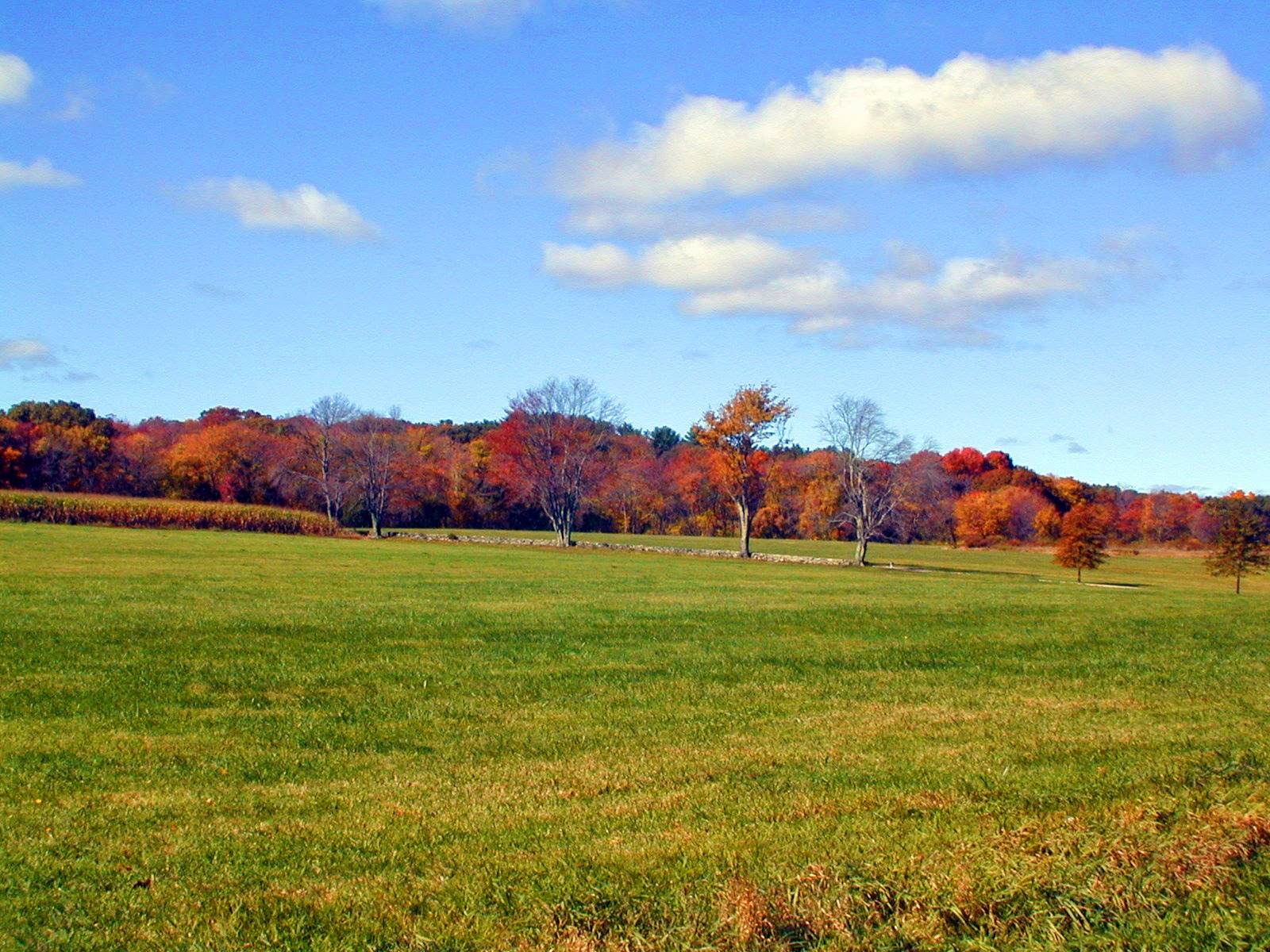
Now for a bit of Connecticut Lowlands!(Berkshire hills). Less than a mile from my home is this hilltop farm, with views towards our neighboring town to the East, Roxbury, CT. 


\
Town Line Farm Road, between Bridgewater and Roxbury. There are still a few working dairy farms in the area; 50 years ago there were dozens of them (and the cows outnumbered the people). Many of the farmers of that generation have been my patients. Farming is dangerous work!


Looking back towards Bridgewater at some more farmland (cornfield to the left).


A converted farm house on Town Line Farm Road; this one hosts an annual Halloween weekend Pumpkin Catapult contest, which is quite fun to watch. 


Some modern day re-enactors wearing the uniform of the 71st HLI. Plenty of  possible choices for pants for this unit  - buff, grey, white, or trews!

Friday, November 7, 2014

Saxon Napoleonic Light Infantry

The Saxon army was very late in incorporating light infantry into its forces. Starting in 1793, each line infantry company designated 1 corporal and 9 privates as regimental Sharfschützen, to which were added 2 officers and 3 drummers. Their only uniform distinction was a 12" tall green plume on their Bicorn. In 1802, the Schützen were pulled from the line regiments and organized into 2 battalions; the drummers were replaced with buglers. However, they did not fight organized in this manner in 1806-1807. In May 1808, a more permanent organization was finally established for the two Schützen battalions, each having 4 companies, each with 174 men and officers. They still wore their white regimental uniforms, with the bicorn and green plumes. The 1809 campaign was fought with these 2 Light Infantry battalions, von Metzch and von Egidy. In late 1809, a company of Jäger was added, which were equipped with their own rifles. 

In the reorganization of the Saxon army that took place in 1810, the Light Infantry were expanded into two Light Infantry regiments, the 1 st regiment being known as Light Infantry Regiment Le Coq (commandedb by Oberstleutnat von Egidy), and the second as Von Sahr (commanded by Oberst von Tettenborn). Each Light Regiment had a book strength of 1,653 men.

The Light Infantry finally got a modern uniform in 1810, being of the same overall pattern as the new Line Infantry uniforms. It included a black shako with a brass plaque on the front, brass chinscales, a dark green plume, cords ,and flounders, and a white national cockade at the front. NCO's had a brass band around the top of their shakos. Officers had gilt fittings on their shako, gold lace, silver cords and flounders, and a gold edge to the polished black leather visor. The officer's shako had a top band in gold in a "clover leaf" pattern. Considering the arms of Saxony, and the period illustrations, I suspect this was more in the same pattern as the "Bend of Common Rue" as seen on the Saxon arms. The same pattern was seen on the shakos of Line infantry officers.

The new jackets were dark green with black rounded cuffs, collar, and lapels. These were all piped in scarlet, as were the dark green shoulder straps and turnbacks. Buttons were brass, belts were black. Pants were dark grey with a scarlet stripe decorating the outside seam, and scarlet "points" decorating the fronts. Packs were dark brown calves's skin with black straps, black slings on the muskets.

Officers jackets were double breasted with long tails, and gold piping. Pants for Officers were dark green with gold piping and Hungarian knots for full dress; on campaign either dark green with a black stripe, or dark grey with a scarlet stripe down the outer seams. Musicians had brass horns and green epaulets piped red (probably more like shoulder wings in the German style, I suspect). Drums were green with black leather fittings, and green/white diagonal striped rims. Horns had dark green cords as decoration. 

The single company of Saxon Jäger had a similar uniform, with the collar being dark green with a black collar patch, piped in scarlet, and the turnbacks being light green, piped in scarlet. Their shako had a brass hunting horn instead of the Royal Cipher plate used by the Light Infantry. 


Saxon Light Infantry (Leichte Infanterie, still sometimes referred to as Schützen, to be as confusing as possible!) 1810 - 1813. Vintage Minifigs once again, painted about 25 years ago. 


The ugly silver thing is my attempt to use epoxy putty to convert a Standard bearer into a Pioneer with axe. The Perry Brothers clearly have nothing to fear from me, LOL!  Despite the label, this is actually the Von Egidy (or LeCoq) Light Infantry; the Jäger were but a single company as discussed above


This shots shows the black facings trimmed with scarlet the best. The drum was painted according to the information I had available at the time; see the text for correct details!


The sapper figure has the brass band on his shako indicative of an NCO. The red cords on the drummer's shako would be correct for a Line unit, but not for this Light regiment; I should change that (easy to do), as well as painting the base edges! 


Personal Note:  I was especially pleased to discover the existence of the Von Egidy Light Infantry unit in the Saxon Army. When I started my practice 30 years ago, one of my earliest patients had that rather unusual last name. He was well into his 80's at the time and not in terribly good health, My wife (a Physical Therapist, like the late Donald Featherstone) also treated him, and we wound up become friends outside of the professional relationship. It turned out that Mr. Von Egidy was born in Desden, and collected Zinnfiguren in a limited way (at least compared to my collection of "military miniatures"). When we bought our house, he and his wife were frequent visitors. He ultimately wound up deciding to have a hip replacement due to severe pain, which I opposed due to his high potential operative risk, but OK'd when it was clear how miserable he was from it, and after he and his family made it clear that they accepted and understood the risks involved. The last time that he was over to our home before his surgery, he insisted on going down the cellar stairs to see my collection, despite how difficult it was for him to do so. Having been advised of his intent in advance, I had set up my table with a grand representation of the Battle of Dresden in his honor. He was thrilled with the spectacle, and easily picked out the Altstadt, Neustadat, the river Weisseritz etc from his childhood memories of the city. Sadly, my reservations proved all too appropriate, and he never got out of the hospital after his surgery (at a much larger institution). My wife and I missed him terribly, although we remain friends with his widow 25 years later, herself now in her 90's. I had started my Saxon Army after making Mr. Von Egidy's friendship, and the Von Egidy "Jagers" were on the table for his inspection at his visit. He was insure if his family was related to the Saxon officer who headed the unit, bit it is hard to imagine that he wasn't! Anyway, I never fail to bring him to mind whenever these fellows grace the tabletop!  Möge Gott Sie nah an seinem Herzen immer  halten, Herr von Egidy!

Monday, November 3, 2014

Some talk of Alexander...

My Macedonian army is designed to allow it to represent any of the three main Successor armies - Antigonid (Macedonian), Seleucid (Persian), or Ptolemiac (Egyptian)... more or less, some with an extra unit or two from another of my Ancient armies. As My Indian Army set up last month revealed a need for some additional "elbow room", I added another row of squares to all for sides, making the grid now 16 square wide and long. I also finished up some hills designed top fit the grid. These had been carved from pink Insulation foam several years ago, and then painted with a really sickly looking lime powder green acrylic base coat (leftover wall paint).  Some spays of Dark green, yellow green, and red-brown paint later, and they look much better! I may dry brush the edges of the hills in a light brown color to bring them out a bit. Here's the Army list for Legio Quaternarius:


#5  Macedonian Successor States  (300 - 100 BC)

Core Units - common to all Succesor Armies

QTY
Unit Description
Unit Type
Cost
Subtotal
5
Phalanx
HI*PK,Sh
15
75
2
Hypaspists
LHI*LS,Sh*Elite
14
28
2
Successor Hvy Cav
HC*SS,Sh
15
30
2
Succesor Light Cav
LC*J,Sh
9
18
1
African Elephant
EL*J
16
16
2
Light Bolt Throwers
ENG
12.5
25
1
General
General
25
25
15
TOTALS
217


Antigonid (Macedonian)

1
Thracian Peltasts
LMI*2H,J,Sh
8.5
17
2
Thracian Archers
LI*B
2.5
5
1
Thracian Lances
LI*LS,No Sh
8
8
2
Javelinmen
LI*J,Sh
4
8
2
Slingers
LI*Sl,Sh
2.5
5
1
Staff Slingers
LI*Staff Sling, no Sh
2.5
2.5
1
Scythians
LC*B
7
7
25
TOTALS
277


Ptolemaic (Egyptian)

QTY
Unit Description
Unit Type
Cost
Subtotal
1
Camel Archers
LCam*B
8
8
1
Chariots
LCh*B
12
12
1
add. Successor HC
HC*SS,Sh
15
15
2
Peltasts
LMI*LS,J,Sh
8
16
4
Egyptian Archers
LI*B
2.5
10
24
TOTALS
278


Seleucid (Persian)

QTY
Unit Description
Unit Type
Cost
Subtotal
1
Cataphracts
EHC*LS, no Sh
16
16
1
Camel Archers
LCam*B
8
8
5
Selucid Archers
LI*B
2.5
12.5
3
Peltasts
LMI*LS*J,Sh
8
24
25
TOTALS
277.5


Here is the Antigonid version of the Successor army (minus an Elephant unit to be borrowed from my Carthaginians laid out on the grid for Legio Quaternarius. Deployment will be limited to 3 squares onto the table, with no units starting in the two rows to either flank. The two contraptions to the rear are my scratch built shooting catapults, described previously here


Antigonid Left Flank; we'll be covering each of the unit types in more depth later.


Antigonid Center - mostly units of extremely powerful; Phalangites!


Antogonid right flank.


Right Flank again

Center - replacing the ancient alloy pikes, many bent or broken,  with wire ones is the main work needed to get this army ready for Prime Time again. 


Left Center


Left Flank.


5 units of HI Pikemen with shields formed into one big block.  - the left hand one with the white "facing color" had it's pikes replaced with wire ones years ago - in addition to their fragility, the alloy pikes were too tall to fit my storage boxes properly as well! That means 31 pikes to replace (one figutre has the Standard and hence needs no work). 


The alloy pikes look a bit better from this vantage point!


2 units of LI Slingers.


I recall actually making the sling "bullets" out of epoxy putty. Lead was used by experienced slingers of the classical era, such as the Rhodians.


2 stands of Cretan archers.


They would benefit from some black lining if I have the time. 


2 units of Agrian Javelinmen.


From this angle, somehow these guys all remind me of Sarek, LOL!


Staff Slingers (borrowed from my Byzantine army).


Again, a bit of black lining might perk these otherwise rather dull paint jobs up somewhat!


Suiccessor Heavy cavalry - the mounted striking force of the Army!


I don't recall the manufacturer - ? Garrison or Ral Partha - definitely not Minifigs like the rest!


Dry Brushing the helmet crests with Hippo Gray would bring these stalwarts more to life as well!


Successor Light cavalry - Prodromoi.


Pretty much OK as they are - straightening the Javelins just invites breakage!


Thracian Lancers - armed with the 14 foot Xyston; probably about as awkward to handle in real life as it appears here!

While vulnerable due to their Light Cavalry status, their long lances make them the most dangerous Ancient LC in melee.  In Legio Quaternarius, you usually try to maneuver them into the flank of the enemy who is otherwise engaged to their front - and serve them en brochette!


These colorful chaps are Scythian LC Horse archers. 


While relatively weak on the battlefield, in their harassing role these troops could be a major pain in the rear on the march to armies not equipped to deal with them. 


Usually when you saw the rear of Scythians, it was a feigned retreat!


Greek Mercenary Hoplites - Thebans to the left, Athenians to the right.


Probably more colorful than real life, but what the heck? :-)


The leather pieces hanging down from the waist are protective pteruges.


Macedonian Hypaspists. These elite troops formed the junction between the vulnerable right (shieldless) flank of the Phalangites and the cavalry. I have given them white metal  shields, as some evidence suggests they may have been renamed to become the Agyraspides, or "Silver Shields"


Regardless, in keeping with their role, the Hypaspists had lighter armor, shorter spears, and larger shields than their Phalangite bretheren. 


Thracian Peltasts - armed with Javelins and adept at using broken ground to their advantage...


the vicious rhomphia, a sort of curved axe, made the Thracians dangerous in hand to hand fighting as well!


More standard Greek style Peltasts. 


Armed with Javelins, long spears, and shields but little or no body armor.


The Seleucid army had a small number of cavalry with metal armor on the front of the horse and most of the body of the rider. These Kataphractoi were inspired by their encounters with similarly equipped Parthian cavalry. 


These cataphracts were the beginning of the trend that would ultimately lead to cavalry supplanting infantry as the principal arm of most later Ancient armies. 


Arab Camel Archers; I do love camels!


I think most Wargamers love some Camelry too, both for their uniqueness and


the "dreaded smell factor", which is present in Legio Quaternarius, as well as most Anceint rules!


A Successor general and some war engines. 


"Alexander the Great appears to have been one of the first generals to employ artillery on the open field of battle, rather than in a siege. He used massed artillery to fire across a river at a Scythian army, causing it to vacate the opposite river bank, thus allowing the Macedonian troops to cross and form a bridgehead".  (Quote from Wikipedia)


"By Alexander’s time, torsion-powered artillery was in use. Torsion machines used skeins of sinew or hair rope, which were wound around a frame and twisted so as to power two bow arms; these could develop much greater force than earlier forms." (ditto)


    Of course, In Legio Quaternarius, the fire of these engines is represented by the player shooting with the actual model catapults seen at the beginning of the post. This army, along with my Mauryan Indians, Republican Romans, and Carthaginians will be on the table at Ellis Con, held Saturday November 15th, form 9AM - 9 M in Danielson, CT. If all goes well Barry and I will play a refresher game of these rules this weekend, perhaps using my Sassanid Persian and Byzantine armies.