Saturday, February 7, 2015

British Generals part 2

My second group of British Napoleonic generals are from a set by Wargames Foundry, focusing on British commanders at Waterloo.


Here's the whole set of 10 figures. They are clearly heavily inspired by the 1978 Osprey men at Arms "Wellington's General;s" by Michael Barthorp.


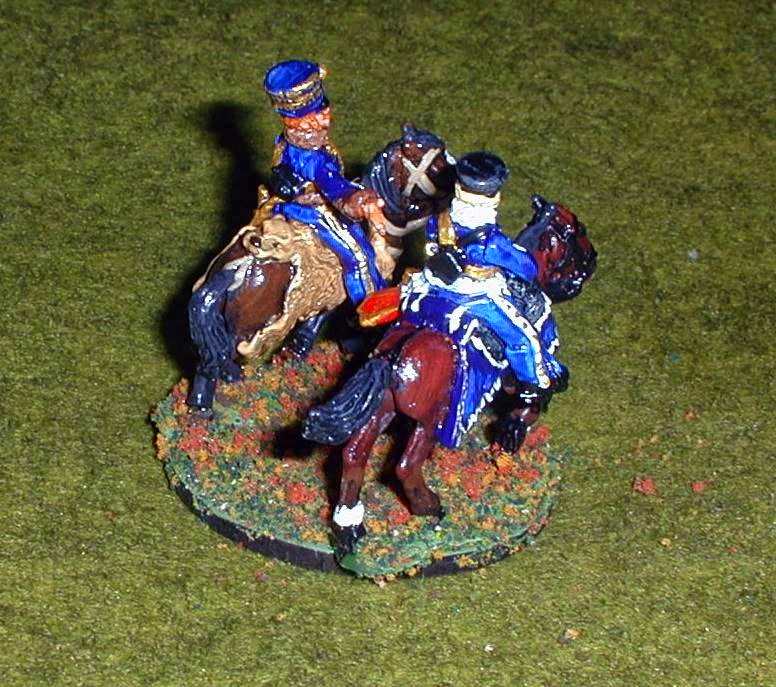
Here is the "Iron Duke" himself, with an ADC and an officer of Dragoons.  


Wellington was known as a rather dapper dresser, and the understated style of his dress as seen above became quite famous.


He held an amazing number of titles, being made a Knight of the Bath (thus Sir Arthur Wellesey) in 1804, Viscount Wellington in 1809, Earl of Wellington and then later Marquess of Wellington in 1812, and Duke of Wellington in 1814. 


Wellington held still more foreign titles, as well as honorary appointments as Field Marshal of the armies of Austria, Hanover, the Netherlands, Portugal, Prussia, Russia, and Spain!
l

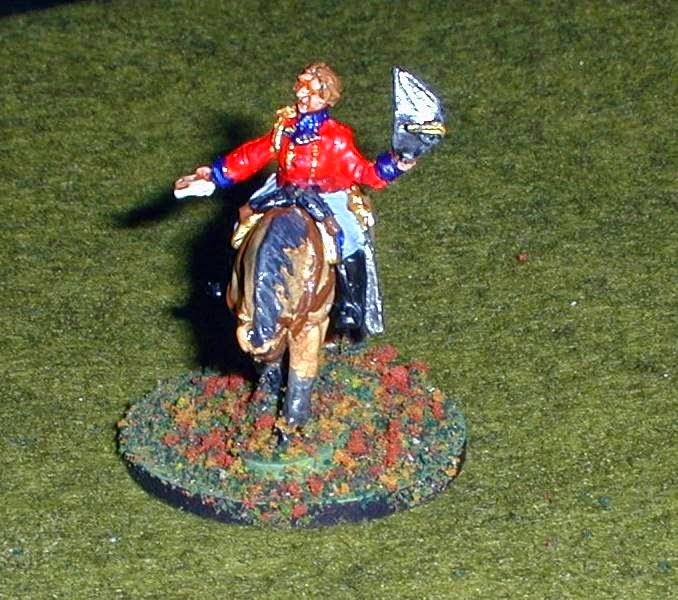
Here is Henry Paget, Earl of Uxbridge (1812), in the ornate uniform he wore at Waterloo. 


He served  as a Lt. Colonel of Infantry (80th Regiment) in the Duke of York's ill fated campaign in Flanders in 1794, before transferring to the cavalry, where he commanded the 7th Light Dragoons. He commanded a brigade of light cavalry and served, with distinction in the otherwise disastrous campaign of 1799 in the low countries, and was promoted to major General in 1802.


Promoted to Lieutenant General in 1808, he commanded a Division of cavalry under Sir Thomas Moore, and once again served with distinction during the difficult retreat to Corunna. After his return to England, he left his wife and eloped with Wellington's sister in law. Not surprisingly, he was not welcome in the Peninsular army under Wellington's command, and never returned there.


Despite the above family issues, he was appointed command all of the Cavalry in the Anglo-Allied army for the Hundred Days campaign. Very late in the Battle of Waterloo, a cannon ball stuck him in the leg, which was amputated shortly thereafter. According to tradition, he was not far from Wellington at the time of his injury, and exclaimed to him "By God sir, I've lost my leg", to which Wellington replied, "By God sir, so you have!" Said leg was later buried in Waterloo, and a shrine erected, becoming quite a tourist attraction, and later the cause of a diplomatic incident - it's macabre history is told here on Wikipedia.


Sir Roland Hill, seen above, was perhaps the most trusted and best liked of Wellington's subordinates.


He joined the army at age 18, and came to notice serving as an ADC at the same siege of Toulon in 1793 where a certain Corsican general of Artillery first came to prominence! He served in Egypt in 1801 at the head of his own 90th regiment of foot. Rising to Major general, he commanded a brigade in Hanover in 1805 and then in the Peninsula under Wellesey, then Moore, and then Wellington again. 


Promoted to Lieutenant General in 1812, he was one of the few officers Wellington trusted with independent command. He commanded the 2nd Division and later a Corps in both the Peninsula and again during the 100 Days campaign. Reliable and energetic, he was also a kind man who was beloved by the soldiers under his command. 


Sir Thomas Picton joined the army, on paper at least, as an ensign at age 13. He first saw active service in the West Indies, where he remained until 1803. He was promoted to major General in 1808.


Picton commanded the 3rd Division throughput the Peninsular War, playing important roles at the battles of  Busaco and the sieges of Badajoz and Cuidad Rodrigo. He was promoted to Lieutenant General in 1812. Hmm, I need to paint the edges of this base, don't I?  I was running low on my Litko bases and so used some very old tan masonite for this, and the unpainted light color really shows!


Picton was called to command the 5th Division during the Waterloo campaign, and was badly wounded in the fierce fighting at Quatre Bras. He concealed his injuries and led his Division again at Waterloo, where he was killed by a bullet to the head.


Picton was famous for his disdain for uniform regulations, and fought the Waterloo campaign entirely in civilian dress, including his famous top hat, which is preserved in the British national Army museum. I have chosen to give him a dark green coat here to help this unique character stand out more on the tabletop!


Finally we have this un-named British General officer, reading a map, and perhaps seeing the English sounding village of Waterloo near Brussels. He wears his lapels fully buttoned up, and thus all but invisible. 


He wears a regulation British General's uniform, although the white feathers on his hat are supposed to be reserved for higher ranking general officers.


The rear view shows the crimson sash worn by all British officers, and some of the gold lace detailing on the tail of his jacket. 


With the change in plans to running Ligny at Historicon, after this post there will a hiatus in posts about red coats and regimental histories, while I switch to a 5 month span of Prusso-mania!

Peter

Wednesday, February 4, 2015

Battle on the Katzbach, 1813: Scenario for Snappy Nappy

    I have been planning to run a Napoleonic game at HAVOC this year (March 2015). My original; idea was to use Die Fighting 2, which I think would still have worked well. However, on considering it,. it seemed like running a game with Snappy Nappy made more sense, as it would feed into the big "Waterloo Campaign in a Day" with those same rules that we'll be running here in Connecticut a month later. In considering possible actions, I thought it would be good to do another 1813 battle. So I chose one that I haven't done before - the Battle on the Katzbach, August 26, 2013 - perhaps the finest day of Blucher's career, if no so for his opponent, Marshal MacDonald. The forces involved were considerable close to 100,000 men on both sides, and divided among four or more Corps. In addition, the OOB has a nice variety of troops and nationalities for real Napoleonic color... although with the abysmal weather that day, my table will be far more colorful than the soggy overcoats that were doubtless the reality of the day for most!

    The game should fit well on one of  the roughly 8 x 5 foot tables available for that convention, as well as the four hour length game slots. I developed the scenario from several sources, including Nafziger's  invaluable "Napoleon at Dresden: the battles of August, 1813", and the scenarios for the battle for Napoleon's Battles (by Rafael Pardo) and Sam Mustafa's Grand Armee:

http://www.rafaelpardoalmudi.com/nbkatzbach.html

http://www.deepfriedhappymice.com/GA_Scen_Katzbach.pdf


    It actually "warmed up" to 32 degrees this past weekend, so with that, heat leak from the attached house, some direct sunlight, and the heat from the car engines after being driven, the garage was warm enough for priming... and it doesn't appear like it will be again for weeks! So I primed the entire Lancashire Games order -over 120 figures worth of Prussians. I then painted the Prussian Blue on all of their coats 2 days ago. They should keep me busy painting until Spring!


A romanticized version of Blucher at the Katzbach, his famous pipe in hand.  At least *he* had the sense to have his overcoat on before the rain starts!


French Army of the Bober, Marshal MacDonald: Reliable


III Corps, GD Souham: Reliable
6 stands Provisional Light  Conscript
4 stands Provisional Line   Conscript
10 Stands Line                   Seasoned
2 stands Light                    Veteran
2 stands Baden Line          Veteran
4 stands Hessian Line        Elite
2 stands Hussars                Elite
4 stands 6# Foot Artillery (1 Baden/Hessian)   Seasoned
1 stand 12# Foot Artillery    Seasoned
1 stand 6#  Horse Artillery   Seasoned

V Corps GD Lauriston: Weak
20 stands French Line             Seasoned
2 stands Chasseurs a Cheval   Seasoned
2 stands 6# Foot Artillery       Veteran
1 stand 12# Foot Artillery       Veteran
1 stand 6# Horse Artillery      Veteran

XI Corps, GD Gerard: Weak
6 stands French Line             Seasoned
4 stands Italian Line              Seasoned
4 stands French light             Veteran
2 stands Italian Chasseurs a Cheval    Seasoned
2 stands 6# Foot Artillery                    Veteran
2 stands 12# Foot Artillery                  Veteran
1 stand Italian Horse Artillery.             Veteran

II Cavalry Corps, GD Sebastiani: Dashing
4 stands Hussars                            Elite
4 stands Chevau-Leger Lanciers   Veteran
2 stands Chasseurs a Cheval         Elite
2 stands Carabiniers                      Elite
2 stands Cuirassiers                       Elite
2 stands 6# Horse Artillery           Elite


Allied Army of Silesia, General Blucher: Charismatic


11th (Russian) Corps, Sacken:  Reliable
6 stands Russian Line             Seasoned
4 Stands Russian Jager           Veteran
2 stands 6# Foot Artuillery    Seasoned
2 stands 12# Foot Artillery    Seasoned

3rd (Russian) Cavalry Corps, Tschaplitz:  Weak
2 stands Russian Dragoons    Seasoned
2 stands Russian Hussars       Elite
6 stands Russian Cossacks     Militia
2 stands 6# Horse Artillery    Seasoned

1st (Prussian) Korps, Yorck:  Dashing
2 stands Prussian Grenadiers    Elite
2 stands Prussian Jagers           Elite
12 stands Landwehr                 Conscript
10 stands Prussian Line           Veteran
2 stands Prussian Hussars        Elite
2 stands Prussian Dragoons     Seasoned
2 stands Prussian Uhlans         Veteran
4 stands Landwehr cavalry      Conscript
3 stands 6# Foot Artillery        Veteran
1 stand 12# Foot Artillery       Veteran
2 stands 6# Horse Artillery      Veteran

8th (Russian) Corps, St Priest:  Reliable
6 stands Russian Line             Seasoned
4 Stands Russian Jager           Veteran
2 stands 6# Foot Artillery       Seasoned
1 stands 12# Foot Artillery     Seasoned
4 stands Russian Dragoons    Seasoned
2 stands Cossacks                   Militia

Left Wing (Russian) Langeron:  Dashing
14 stands Russian Line Infantry      Seasoned
8 stands Russian Jagers                   Veteran
6 stands Russian 6# foot Artillery   Seasoned
2 stands 12# Foot Artillery              Serasoned

1st (Russian) Cavalry Corps, Korff:  Reliable
2 stands Russian Dragoons              Seasoned
4 stands Russian Mounted Jagers    Veteran
2 6# Horse Batteries                        Seasoned


Map for Katzbach game, taken from the Grand Armee scenario by Sam Mustafa

All buildings represent Towns (hard cover). All towns can hold up to 2 bases,
The Katzbach river can be forded from the north edge of the map, to the town of Schlaupe. From Schlaupe west, it is crossable only at the two bridges, counting as Rough Terrain. After 2 turns of Deluge, it will become impassable everywhere except at bridges (see below). . 
The swampy ground counts as Broken Terrain, the woods as Rough Terrain.

At the end of each turn, the Allied player rolls a D10; if the score is less than or equal to the number of the turn just completed, then Sacken's 11th Corps may enter on the next turn. Sacken may start on the North edge of the table, anywhere East of Eicholtz, but his troops must be over 12" from any French stands.

At the end of each turn, the French player rolls a D10:
1,2,3        Weather improves one level (Rain stops if raining)
4,5,6,7     Weather is unchanged
8, 9, 10    Weather worsens one level - if raining, now at Deluge

Rain - per Snappy Nappy Rules
Deluge  - NO infantry fire except from buildings, Artillery fire is at -2 (same as Rain), Infantry in melee with cavalry is -1 per stand additional. All command distances reduced 50%.. After 2 successive turns of Deluge, the ground is soaked, and all terrain counts as one level worse for movement (Open -1/3 Move, Broken - 1/2 Move, Rough - 2/3 Move).

** having played the scenario out, I'd use a 6 foot wide table, and decrease all the forces by 1/3 for more maneuvering room.

Friday, January 30, 2015

British Napoleonic Generals, Part 1

I have had almost 2-0 British high command figures on my painting desk for over 6 months; they have been getting a little attention here and there as I had the time, and I took advantage of some recent New England "snow days" to finally finish them!


This is a group of seven 28mm command figures from Old Glory; their British General;s set plus one of the officers from their RHA set, who will serve as a British Artillery commander if needed. 


Here's the first one - "are those Prussian or French I see coming?"


He is wearing a pretty standard British generals's uniform with white pants.


Some of the dark red shading on the jacket doesn't show up too well here. I might consider black lining the crimson sash - the universal mark of a British army officer. 


Our next chap doffs his chapeau...


as he prepares to hand off some orders to an unseen ADC .


The gold cords on the right shoulder became a mark of a British General in the later part of the Napoleonic Wars.


Here's the lone Cavalry general of the set.


His dress is clearly inspired by that worn by Uxbridge at Waterloo.


- right down to the leopard skin saddle blanket!


"Orders?! My Lord Soggybottom should presume to send ME  Orders? Harrumph!"


The dark blue saddle blanket with gold trim was standard issue for higher officers, apparently without any royal monograms or similar frippery!


The General's horses were painted en masse about 6 months ago, using staining and washing techniques. 

The standard British officer's coat was bright red with dark blue cuffs, collars, and lapels, with gold ornamentation. 


Turnbacks on the coat were white.


The short plume was UK standard white over red. No gold lace on the bicorn, though!


Classic "General with telescope" pose for this fellow - I should add a spot of light blue to the end of the scope for the lens!


He again wears the regulation uniform for a British General. 


"I say, Smithers, is that the Gin wagon approaching?"


This RHA officer was a spare from the Old Glory 20 figure RHA bag; I saved him for use as a Commander


The pelisse was worn by some RHA officers with a higher fashion sense!


Quite a dapper looking officer, especially for the Artillery!


The second part of this series will be some Foundy command figures form their last big sale a year or so ago!

Wednesday, January 28, 2015

Lancashire in the Raw

Lancashire Games has a 15% off sale until the end of this month (January); I took advantage of the sale and placed an order on January 9th; the first half of the order arrived 1/`19, and the seciond half yesterday; excellent turn around time. the sale applies to pretty much everything. With the discount, a pack of 4 28mm Infantry is $5.42, about $1.35 a figure. However, if you order them in battle Packs of 16 (includes command figures), a pack on sale is $20.84. about $1.30 a figure. But wait, there's more... if you order 4 or more Battle Packs the price (on sale)  drops even further  to $18.06 a pack or about $1.13 a figure. The bad news is the overseas shipping - at 40% that's a real OUCH, but the multiple discounts above keep the price within reason.

    You don't see much discussion of their ranges, and the pictures on their website are fairly poor, so I thought I'd post some pictures of the figures I received "in the raw" as it were, before they are even primed. There was a modest amount of flash on almost every figure, but that was easily removed. the size of the figures is similar to Old Glory 25's, I'd say, just a bit chunkier. All packs have a mix of poses. I ordered a total of six battle packs - 4 of Prussian Landwehr and two of  Prussian Grenadiers (wearing their tall plumes - yay, one of my motivations for ordering from this manufacturer in the first place!), plus 2 Prussian Generals and a few single packs to fit my organizational needs.

   Although the storm Tuesday was much less than expected here in Western CT, it still kept us in all day, so I put the time to use prepping the figures and getting them ready for priming. Now I just need it to warm up to at least 30 degrees so that I can prime them in my garage! If I do that after the cars have been out and returned, the engine heat warms the attached garage up into the 50'/s.


First up an 18 figure unit of Landwehr. I culled all the "Advancing" loses from the 4 BP's plus, so this outfit will have pretty uniform poses, with a few men lacking hats.


Another view. I glue my figures to tongue depressors before priming and painting. I reuse them (ick, not after examinations, but with multiple crops of figures) many times before discarding the old ones for new sticks. The green blotches of paint indicate that this will be a Westphalian Landwehr battalion, with green facings. 


Here's the second unit of Landwehr; this one has the men in a "firing" position. I know some swargamers don't like this position due to tabletop and storage issues, but I like some of my infantry in firing poses. I actually ordered my extra Landwehr figures in "Firing poses", which worked out well. 


Another view of the 2nd unit; the yellow splotches indicate this will be a Silesian outfit, with yellow facings. 


The third unit is again in a fairly uniform "advancing" pose. The standard bearer is cast open handed and will need a Florist's wire flagpole added before priming.


The light Blue splotches indicate an Elbe unit, with Light blue facings. The figures have nice details in the folds of the Litewkas and pants, which should make painting them easy. They also have a nice raised Landwehrkreuz at the front of their Schirmutze caps. 


Here's the final Landwehr unit; this one had dark red splotches (Madder or Crab Red), indicating a "Rhein" department unit.


This unit has a cacophony of poses... perhaps appropriate for a very raw unit. The Litewkas of these figures vary in length considerably, just as they did in real life. 


Now we move on to the Grenadiers. Without their plumes, it is almost impossible to tell tell the Grenaiders from the Prussian Line infantry. Lancashire is the only manufacturer I know of who currently makes 28MM Prussian Grenadiers with their tall plumes; thanks to my friend Steve in Australia for pointing them out to me a few years ago!


The orange-red splotches indicates these Grenadiers will be part of an East Prussian unit.


The second Grenadier unit has a bit more variety of poses. No splotyches indicates this will be a Pomeranian unit (white facings). 


The Grenadier Standard Bearers are cast with alloy flagpoles; I will probably cut them off and replace with wire. 


The final unit is in predominantly firing poses; the first 4 stands will form a smaller unit, and the extra command stand will be be used to bring an exiting (Minifigs) Grenadier  Battalion up to 4 stands.


The yellow splotches again indicate a Silesian outfit. 


A pair of Prussian Generals by Lancashire Games. The other objects are finials with cords for the standard bearers; once again these will probably work better with wire flagpoles. I may or may not use them.


"Mein lieber General, bestellen Sie einige Zinnfiguren heute, vor dem Verkauf endet!

Sunday, January 25, 2015

Snappy Nappy - Planning The Waterloo Campaign

    We of the Hartford Area Historical Gaming Society are working out the details for our upcoming "Campaign in a Day" to be held Sunday April 26, 2015, using the Snappy Nappy rules by Russ Lockwood. We had a great time with our prior events, the first based upon the events of April 1809, and the second based upon August 1813. This one will depict the events of June, 2015. See the flyer below for the details of the event, which is open to all interested parties. I highly recommend the unique "Fog of War" experience of these events! 


"Scotland Forever!" - Lady Butler's wonderfully romantic painting of the charge of the Scots Greys at Waterloo


   The event will be held at The Portal gaming space in Manchester, Connecticut. The Portal is directly across the street from its parent store, The Time Machine. It is superb gaming space, and ideal for this project. There is excellent lighting and a large number of 4 x 6 foot gaming tables available, most of which will be in use for this project. It worked very well for our 1813 event!


    At present, the plan is to "Zoom in" one level, so that a stand of Infantry represents 1000 men, a stand of Cavalry represents 400 men, and a stand of Artillery represents 12 guns with crews. Infantry and cavalry units generally have 2 stands per unit, while Artillery units have one stand only. At that level, the game could easily handle up to 16 players. Alternatively, if turnout is light, the forces can easily  be cut in half, which would put it back at the base ratios for Snappy Nappy. 


French Army, Napoleon I

1st Corps, d'Erlon
16 Line Infantry,  2 Legere
2 Hussars, 2 Chevau-Leger Lanciers
3 6# Foot Artillery

2nd Corps, Reille
12 Line Infantry, 8 Legere,
2 Chasseurs, 2 Chevau-Leger Lanciers
3 6# Foot Artillery

3rd Corps Vandamme
12 Line Infantry, 2 Regt Etranger, 2 Legere
2 Chasseurs
3 6# Foot Artillery

4th Corps, Gerard
12 Line Infantry, 2 Legere
2 Hussars, 2 Dragoons
2 6# Foot Artillery

6th Corps, Lobau
8 Line Infantry, 2 Legere
3 6# Foot Artillery

1st Cavalry Corps, Pajol
4 Chevau-Leger Lanciers, 2 Hussars,
1 6# Horse Artillery

2nd Cavalry Corps, Exelmans
8 Dragoons
1  6# Horse Artillery

3rd Cavalry Corps, Kellerman
8 Cuirassier/Carabinier
1 6# Horse Artillery

4th Cavalry Corps, Milahud
8 Cuirassier
1 6# Horse Artillery

Imperial Guard, Mortier/Drouot
4 Old Guard, 4 Middle Guard, 4 Young Guard, 1 Sailors/Genie, 
5 Guard HC (2 Grenadiers a Cheval, 2 Empress Dragoons, 1 Gendarmes d' Elite)
6 Guard LC (2 Chasseurs, 4 Lancers)
6 12 # Old Guard FA, 2 6# Old Guard Horse Artillery, 2 Young Guard 6# FA, 1 Line 6# Horse Artillery

French Totals:    89 Infantry, 55 cavalry, 29 Artillery
60 Line Infantry
16 Legere
2 Etranger
4 Old Guard Infantry
4 Middle Guard Infantry
4 Young Guard Infantry
6 Hussar
8 Chevau-Leger Lancers
4 Chasseurs
10 Dragoons
16 Cuirasssiers.Carabiniers
5 Guard Heavy Cavalry
6 Guard Light Cavalry
16 Line/YG 6# Foot Artillery
5 6# Horse Artillery
6 Guard 12# Foot Artillery
2 Guard 6# Horse Artillery


Anglo-Allied Army, Viscount Wellington

1st Corps, Prince Willem of Orange 
4 British Guard Infantry, 2 British Line, 2 KGL Rifles, 2 Hanoverian Lts/Jager, 2 Hanoverian Line, 2 Dutch Jagers, 2 Dutch Line, 6 Dutch Militia, 4 Nassau Line
1 British 9# Foot Artillery, 1 KGL 9# Horse Artillery, 1 Dutch 6# Foot Artillery, 1 Dutch 6# Horse Artillery

2nd Corps Hill
2 British Highland LI, 2 British Fusiliers, 4 British Line, 2 KGL Line 2 British Rifle, 2 Hanoverian Line, 4 Hanoverian Landwehr,  2 Dutch Light, 4 Dutch Line, 2 Dutch Militia
1 6# RHA, 1 British 9# Foot Artillery, 1 6# Dutch Foot Artillery

Cavalry Corps Uxbridge
2 Horse Guards, 2 Life Guards, 2 Scott's Greys,  16 British/KGL Light Dragoons/Hussars, 4 Hanoverian Hussars, 4 Belgian Carabiniers (HC), 4 Dutch LC, 2 Brunswick LC
(We have lots of Brunswick Cavalry, so some may fill in for the Dutch and Hanoverian LC)
2 9# British RHA, 1 6# Dutch HA 

Reserves, Wellington
4 Highlander Infantry, 4 British Line,  6 Hanoverian Landwehr, 6 Brunswick Infantry, 4 Nassau Infantry
2 RHA 2 British Foot Artillery, 1 Brunswick 6# Foot Artillery

Anglo-Allied Totals  76 Infantry, 36 cavalry, 15 Artillery
10 British Line
2 British Fusiliers
2 British Light Infantry
4 Highlanders
4 British Guard Infantry
4 British/KGL Rifles
2 KGL Line
2 Hanoverian Light Infantry
4 Hanoverian Line
10 Hanoverian Landwehr
4 DB Light Infantry
6 DB Line
8 DB Militia
8 Nassau Line
6 Brunswick Infantry
4 Guard Cavalry
2 Scott's Greys Dragoons
16 British/KGL Light Dragoons/Hussars
4 Hanoverian Hussars
4 DB Heavy cavalry
4 DB Light cavalry
2 Brunswick LC
4 British FA
6 British/KGL HA
2 DB 6#Foot Artillery
2 DB 6# Horse Artillery
1 Brunswick 6# Foot Artillery


Prussian Army, Marshal Blucher

1st Corps Ziethen
10 Prussian Line, 6 Prussian Reserve, 10 Prussian Landwehr
2 Hussar, 2 Dragoon, 2 Uhlan, 4 Landwehr Cavalry
2 6# Horse Artillery, 2 12# Foot Artillery, 4 6# Foot Artillery

2nd Corps Pirch I
6 Prussian Line  10 Prussian Reserve, 10 Prussian Landwher 2 Ex Lutzow Freikorps
4 Prussian Dragoons, 4 Prussian Hussars, 4 Prussian Landwehr cavalry
1 12# Foot Artillery, 2 6# Horse Artillery, 4 6# Foot Artillery

3rd Corps Thielmann
4 Prussian Line, 4 Ex-Russo-German Legion, 12 Prussian Landwher
4 Prussian Uhlans, 2 Prussian Dragoons, 2 Landwehr Cavalry
2 6# Horse Artillery, 1 12# Foot Artillery, 1 6# Foot Artillery

4th Corps Von Bulow
4 Prussian Line, 4 Prussian Reserve, 10 Prussian Landwehr
2 Uhlans 4 Hussars 2 Dragoons, 6 Landwehr cavalry 
2 Prussian Horse Artillery, 2 Prussian 12# Foot Artillery, 4 Prussian 6# Batteries

Prussian Totals:  92 Infantry, 44 cavalry, 27 Artillery
24 Prussian Line
20 Prussian Reserve
42 Prussian Landwehr
6 Lutzow/RGL Infantry
10 Prussian Hussars
10 Prussian Dragoons
8 Prussian Uhlans
16 Landwehr Cavalry
6 12# Foot Artil;lery
8 6 # Horse Artillery
13 Prussian 4# Foot Artillery


SUMMARY  of  FORCES
ARMY
INFANTRY
CAVALRY
ARTILLERY
French
89
59
29
Anglo-Allied
76
36
15
Prussian
92
44
27
TOTALS
257 (771 figs)
139 (278 figs)
71 (220 figs/71 G)


Main Source used for deriving the OOB in Snappy Nappy terms:
http://en.wikipedia.org/wiki/Order_of_battle_of_the_Waterloo_Campaign

With additional help from the Cent Jours site:
http://centjours.mont-saint-jean.com/organigrammes.php


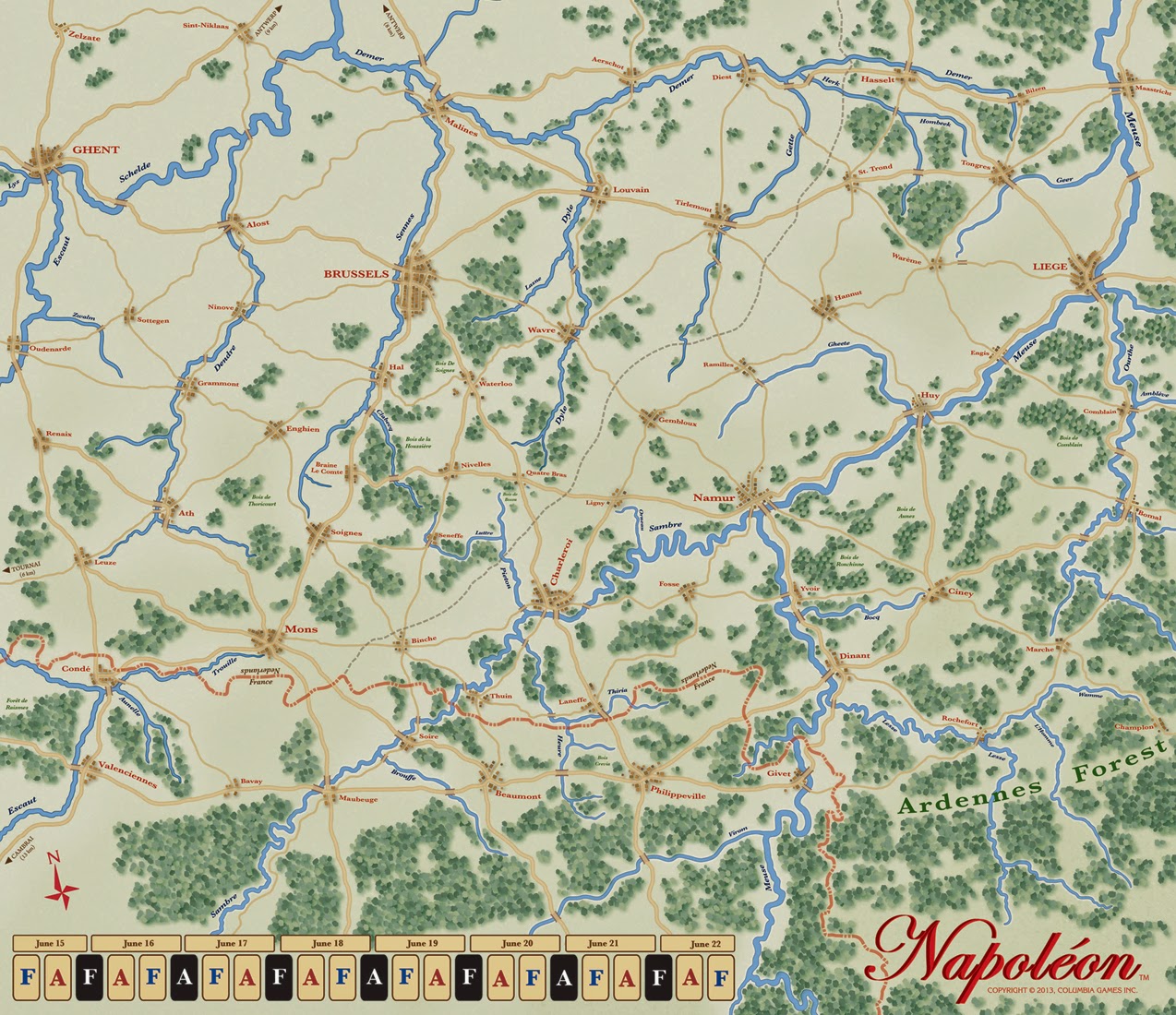
Map of the Theater of War from the Block Game, Napoleon by Columbia Games


I hope to see some of you there!

Peter

Thursday, January 22, 2015

The 95th Rifles - Napoleonic Wars

    Although perhaps the most famous British unit of the Napoleonic Wars, the 95th was also one of the youngest. It derived form the Experimental Corps of Riflemen, formed in 1800, which became the 95th (Rifle) regiment of Foot in 1803. The 95th trained in light infantry tactics along with other two other new  Light Infantry regiments  in 1803. A second battalion was raised in 1805, and a third in 1809. All three battalions served in the Peninsula and elsewhere during the Napoleonic Wars. The 95th was renamed the Rifle Brigade in 1816.


The 95th (Rifle) regiment.  Picking off officers of French units on a tabletop near you!


Old Glory 28mm figures. A is often the case, the green is darker on the figures than it appears in the pictures. 


The Baker Rifle was said to be able to hit a man sized target at 200 years, and as far as 400 years in the hands of an expert marksman.


Many of the riflemen were taught to read and write, which may account for the unusually large number of memoirs penned by enlisted men of the Regiment. Those in turn may also partially explain some of the fame of the regiment as it pertains to the Napoleonic Wars!


Similarly, there are an unusually large number of re-enactor/living history units inspired by the 95th, including outfits in the UK, the USA, and Australia. 

http://www.95thrifles.com/home.html

http://www.95th-rifles.co.uk/

http://www.1st95thrifles.com/

http://www.95thriflesaustralia.com/